How Rucking Builds Mental Toughness, Grit, and Stress Resilience
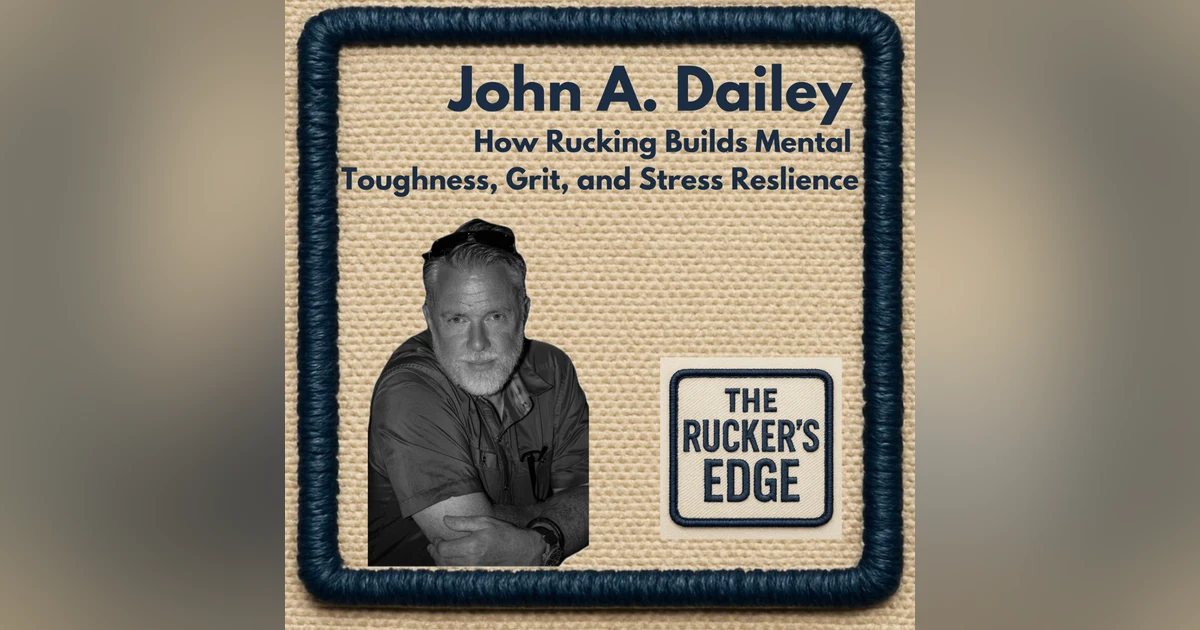


In this episode of The Rucker’s Edge, I sit down with John A. Dailey, author of the book Tough Rugged Bastards and the RTFU newsletter, to explore how rucking can be used intentionally to develop stress tolerance, emotional control, and better decision-making under load.
John breaks down how stress inoculation works, why voluntary discomfort leads to adaptation, and how ruckers can train their nervous system to stay steady during physical and mental fatigue. The conversation focuses on practical application — how pace, environment, and intent influence outcomes more than simply adding weight.
This episode helps ruckers understand how to structure rucks that improve clarity, patience, and confidence during demanding situations, both on the trail and in daily life.
Links & Resources
- John A. Dailey – Website
- Pick up a copy of Tough Rugged Bastards
- Check out the RTFU Newsletter
- The Rucker's Edge – Website
- Follow The Rucker’s Edge on Instagram: @theruckersedgepod
Notes
- Music Credit: “Play This Game” by Black Rhomb.
- I’m not a doctor, and this podcast is for informational and entertainment purposes only. Please consult with your physician before starting any new exercise or physical activity.
0:00 How do you turn rucking from something that just feels hard into a tool that actually makes you calmer, tougher, and more capable under pressure? The answer isn't going faster or carrying more weight. Sure, that has something to do with it, but it really boils down to understanding how controlled discomfort builds stress tolerance, decision-making, operational operations command, and author of Tough Rucket Bastards. We break down how rucking develops grit, mental toughness, stress resilience, and clarity. You're listening to the Rucker's Edge podcast, a show all about rucking that is designed to help you improve your rucking routine, lose weight, and ultimately gain your strength and energy back. Each episode dives into the science, stories, and strategies behind rucking. You'll learn from top ruckers, coaches, health experts, and performance specialists who break down what it takes to train smarter, recover faster, and stay ready for the next challenge.
0:47 So whether you're new to rucking or an experienced rucker that's already logged hundreds of miles, this is the show for you. I'm your host, Spencer. Thanks for listening in. I was fortunate enough to have John Daly come on the podcast and share his wisdom from his multiple decades of rucking. I learned a few things, and I think you will too. All right, here's my conversation with John Daly. John, thanks so much for joining me today on the Rucker's Edge podcast. It's really good to have you here. Yeah, I'm happy to be here. I just mentioned before we hit record, I had the opportunity to pick up your book. I really enjoyed it. I think you're an excellent writer. I really felt like I was at those places in those stories with you. So I really enjoyed the book. But a lot of it stems from your involvement with Detachment One or Det One, which is the first Marine Corps unit in the United States military's Special Operations Command. Can you briefly describe to the listener what Debt One was and your involvement in it? I know that's a loaded question because you wrote a whole book about it. Absolutely.
1:46 So I do have to say before we start that my opinions do not reflect the Marine Corps or Special Operations Command or anybody else. The U .S. Special Operations Command started in 1987, and it was kind of an outcome from the failed attempt to rescue American hostages in Iran. And when it was formed, the Marine Corps was invited to participate but chose not to. And so it wasn't until shortly post -9 -11 that the recognition was, you know, realized that the Marine Corps U .S. was going to need more special operations forces. And this time the Marine Corps was told that, hey, you are going to participate. So the Marine Corps had always had its reconnaissance and force reconnaissance Marines, which were the special operations of the Marine Corps. And that's the units that I grew up in. But in 2003, they were told that you're going to start as a test unit. And that was Detachment 1. Okay. Now. I have a few rucking -related questions. Obviously, this is the rucker's edge, so the majority of the conversation is going to stem around that. In the book you mentioned, at the on -start of Det. 1, your resources were limited in terms of training, building space, you had limited gear, and a lot of uncertainty.
3:08 But y 'all did one thing that you could do to train, and that was rucking. And I'm curious, what did those early rucks look like before equipment arrived and infrastructure was put in place? So as reconnaissance Marines, we all, it was kind of expected that you were, if you're a plumber, you have, you know, your wrenches and things like that. So if you're a reconnaissance Marine, you have a Atlas pack, you know, a large Atlas pack. And most of them, most of the time modified to kind of suit your tastes with added pockets and zippers and things of that nature. So that's the one thing that we knew that we all had. So we would get up early every Thursday morning for whatever reason on Thursday. They would be driven out to a location on base, dropped off, and it was about a 20 -mile ruck back to camp.
3:59 And we would do that the first probably 15 or 16 miles together, you know, moving together. And then the last portion, we would kind of be turned loose into our teams, and it was a race at that point. But yeah, from, you know, a lot of hills in Camp Pendleton, we would ruck with 45 pounds of dry weight and, you know, the expectation that you maintain at least a 15 minute pace. Wow. Okay. So you said Camp Pendleton, where's that located? That's in California on the coast. Okay. It's between San Diego and LA. Okay. I see. Yes. Forty five pounds. You said 20 miles every Thursday. Yeah, it sounds pretty rigorous.
4:41 It was. To say the least. Particularly for, you know, we had some when we were formed, they pulled Marines, some Marines from the East Coast, you know, out out here in North Carolina where it's really flat. So the hills were definitely, you know, those of us who had grown up out there, spent time out there were definitely at it. advantage. Even most of us, you know, where rucking was really not something that you did for pleasure, right? It was something that you did in preparation for, you know, a selection type of event, or it was done, you know, during your job. So, you know, it wasn't, it was pretty rare to see somebody out just rucking, you know, for the sake of rucking.
5:25 Right. And I imagine the 45 pounds, what weight were you using? I'm guessing you're using practical equipment that you would need when you're deployed. Is that accurate? Or were you stuffing bags with sand and whatnot? Yeah, sandbags, usually just because it was, again, we didn't have a lot of, you know, regular equipment. And just so the kind of the load would set. set better. The Alice Pack, if you've never used one, has inside of it sewn up high up against the back, a pouch that was designed to hold radios, like large high -frequency radios or very high frequency, and perfect size for putting a sandbag in to keep it high and tight up against your back.
6:10 So that's what a lot of us would use. Yeah, my buddy Mark that got me into rucking, he has a, well, I guess he had an Alice pack. He was pretty distraught recently when he found out that the frame was starting to rust and it eventually failed on him. So he had to purpose -built rucksack instead of an Alice pack. But yeah, I think it was very dependable for him for several years. Now they make these things called an Alice packs, if I remember correctly. I don't know much about them, but they're pretty much like souped up Alice packs. And someone had mentioned that they're kind of hard to get to unless you're still active. duty i don't know i don't know if that's been your experience or not but you're still involved with the with the military though so maybe not yeah it's they're tough they're becoming tougher to come by so that the actual ones they were they were put into service in vietnam and lasted through the the mainstream military probably up into the early 90s. And within special operations, they're still used a lot. But there are some companies that make, you know, civilianized versions or aftermarket versions. And you can get, so I will buy them whenever I find one, you know, for sale on Facebook or, you know, if I find one in good shape at a reasonable price. And frames, the frames are kind of the, it's a great frame, but it is kind of the weak point. So that's a common thing to know. Okay. So using the rucksack to train prior to equipment arriving, what did rucking give you that, you know, access to gyms
7:40 or pools or even obstacle courses? What did rucking give you that those could not at that stage or the early infancy of Debt One? Absolutely. We did have access to, you know, obstacle courses and we would often use those in conjunction you know you would still go to the pool go to the gym but okay i think a solid foundation of rucking what rucking will do will do when anybody that's done it for any length of time knows that it it absolutely develops the mental toughness you know mental hardness that the resilience you know by going further than you you've done before that i You know, the gym, it's hard to replicate that. I think in the pool, you probably can.
8:25 But something like an obstacle course, you go climb a rope so many times until you can't climb it anymore. You know, when you're rocking, you can always get back up and continue. Yeah, I gotcha. And maybe I'm misremembering. I think maybe when you were setting up or starting. The individual training course, ITC, maybe that's when you were limited on resources for training. Am I getting that mixed up? We all limited on resources for DET1 and ITC or just ITC? DET1, we were absolutely. And that's where we were doing the long rocks. When I said resource, like we didn't have weapons at that point. We didn't have buildings to actually work out of for a lot of it. And then other like communication equipment, radios and things of that nature.
9:11 There were, it did take a while when MARSOC was starting for all of that, you know, for all that equipment to start coming in as well. Well, but at that one, we were certainly more limited for a longer period of time. I see. I see. Now, you mentioned mental toughness. I kind of want to get into that, I guess, aspect of rucking. In the book, you use the term stress inoculation, which I absolutely love. What does that mean in a training context? When a Marine, a soldier, sailor. Anyone, a civilian, you know, when you find yourself in a situation, you cannot train for every situation. Obviously, you know, you can only do so much to prepare. You know, when you find yourself in a situation that's unfamiliar or a situation that has gone bad, you're going to fall back on your ability to manage. stress of that situation. And I think that a lot of studies have been done in the brain. There's a portion of the brain called the, I forget the name of it now, that manages your stress reaction and your stress response. And every time we do something that's harder. than we're accustomed to we i call it digging the well right we dig our well of resilience a little bit deeper and so when we when we go to that well you know there's going to be water there you know there's going to be stress tolerance there and so the more
10:44 that we you know and i think rucking is a you know, phenomenal way because anyone, even you and I rucking together, you know, I might reach the point where I going beyond my capabilities before you, right. But I can, I can carry less weight than you and you, you know, so we can level things out where we can keep ourselves at a, where we're both, you know, gaining from it. If that makes sense. Why is discomfort that you choose different from discomfort that's like imposed on you or. Or is there? I'm guessing in terms of training and specifically rucking, you're choosing to do this hard thing. How does that repetitive or routine load or thinking help you as opposed to just being stressed all the time? I don't know if that question makes any sense to you. I'm just trying to get to the root of what is it about putting ourselves through this controlled discomfort as opposed to... This discomfort that we have no control of. Yeah, I think both will, you know, eventually kind of do the same thing. All right. If I was a child living in the Dust Bowl in the 1930s, all right, I would become very rugged or I would die. All right. I wouldn't have food. I wouldn't have, you know, maybe not a home or whatever the case.
12:08 Yeah, that. You will either, you know, depending on the individual, you will either thrive under that situation and come through it or you'll give up and die. You know, with something like rucking, you can quit at any time, you know, and it's not limited to rucking, but, you know, physical, physically hard tasks, something that I can, you know, I don't have to do this. I can drop my ruck. I can go home and. lay on the couch. But, you know, by choosing to do that, I'm choosing hardship over ease, a life of ease. And, you know, every time I do that, I'm, you know, it's becoming less hard. So, the same workout, you know, a four -mile ruck that almost, you know, killed me, you know, when I started out, you know, becomes commonplace. And so, now it's going to take more. to get me to that same point. And so, like I said, I'm just digging the well of the reservoir of resolve that I have or of capability that I have that much deeper. And I feel like rucking is just the perfect, at least in my mind, the perfect medium for that because you have multiple components. You have the load -bearing component. You have the kind of cardio component of it. You have just your feet hurting. blistering chafing all you know so many things going on and you're you know well within your kind of purview at any point to be like hey i just i
13:38 don't want to do this anymore and sit down and call an uber and go home but the choice not to do that you know every single time that you you know that thought crosses your mind and you choose to continue then you're basically scooping out another big shovel full of dirt you know out of that the bottom of that well Making it that much, that much deeper and making yourself that much more durable. Yeah. And you're developing your mental toughness. I think in the book you call it mental toughness on layaway or something like that. I don't know the good term. I really enjoy it. Now, in the book you mentioned when you were starting the Marine Raider course or MRC, you said that the special sauce to that training was grit. How do you define grit in a training environment? I think it's. One of the somewhat unique things within special operations training is anyone who's going through it is a multiple -time volunteer. So they volunteered to join the military. They volunteered to try out for special operations. And then they're volunteering every minute of every day to continue.
14:43 So they can stop whatever they want. They can throw in the towel and say, I quit. We use kind of those stress inoculation techniques to develop mental hardness and grit. And I think different people define it different ways, but really continuing to do something that you don't have to do that's challenging. Continuing to put the Marines into increasingly challenging, not only physically and certainly physically, but also mentally challenging situations. requiring them to perform greater, more challenging mental tasks. Because when you're broke down on the fifth or eighth day of a patrol, you know, walking through the woods of North Carolina in the heat with, in many cases, an 85, 90 -pound... ruck on your back, plus the equipment that's in your vest and pockets and your weapon in your hands. I mean, quite often they're carrying, you know, upwards of 100, more over 100 pounds. And then you have... You have to think, right? You have to deal with someone, a casualty, you know, when someone goes down and now, oh, by the way, you've got to, you know, carry their equipment. And it's the middle of the night and you could barely keep your eyes open, but you have to get to a medevac zone to get this, you know, wounded person out. And all
16:15 of that really pales in comparison to the realities when you find yourself in combat, you know. So our role is to develop that stress inoculation to the point where We are forcing them, causing them, giving them, I guess, the opportunity to perform incredible feats of strength, incredible feats of mental kind of acuity and agility and physical and mental endurance under situations that hopefully are more challenging than they'll ever actually run into in combat. Interesting. Yeah. So pretty much mental. And physical strength to get the job done, regardless of the conditions, how strenuous they may be. When you don't know what those conditions will be or what the job will be, you know? Yeah. Now, a lot of people, you know, civilians, ruck for fitness now, trying to build up their mental and physical toughness.
17:15 For that civilian rucker, what are the signs that maybe they're actually building grit versus just doing something that... Sucks or just suffering or are there or is it just you're doing it? You're just conditioning yourself unknowingly. I think there are signs, but I think a lot of times we miss them. So if you were to if somebody that just started rucking throws the ruck on goes out the door, I suspect, you know, within 10 or 15 minutes, you're feeling. you know, hotspot. You're feeling like, why am I doing this? There's all sorts of questions running through your head or, you know, you know, is my shoulder broken?
17:57 Is my, my back really, really hurts and maybe I should turn around and call it quits. And there's a fine line between, you know, stupidity some, you know, sometimes, and I tend to err towards that on occasion and an actual, you know, doing an amount that's slightly more than I'm comfortable doing. You know, and it's really important, I think, when somebody is just starting rucking or any sort of challenging endeavor to, you know, be a little smarter than the average bear and not overdo it to the point where you can't do it the next day. But I think that, you know, probably within a month, you know, that weight, that same weight now is, you barely notice that you have it on. You know, probably after two months when you do get a, you know, you notice a blister coming on, you're... It doesn't cause you to stop and question your life choices, right?
18:49 You're like, okay, you know, I've had, you know, my feet have hurt before. I know how to deal with it. I know that I will make it through, you know, I'll make it home and I'll take care of the situation. I'll be ready to go again tomorrow. And I think, you know, we... If you pay attention, I think you'll notice that you are gaining almost weekly. You're gaining a level of great determination. And then over a longer period of time, I think you'll probably start to recognize in interpersonal situations or traffic situations, you're probably a little calmer. You're probably able to look at things a little more rationally because the The situation is probably not as bad as the ruck that you did last week, you know, that was longer than you've ever done before. You've ran out of water and you weren't quite sure you were going to make it, you know. So you make it through things that you don't know that you can make it through. Then you're, you know, some of life's little petty annoyances become far less important.
19:54 That's an excellent way to put that. Yeah. What you said was, you know, if you're starting out, you still have to. You still need to learn your body. You still need to know what's an issue or what's worth stopping for versus what's pushing through. So through experience, you get to learn your body. You know sort of what your body is capable of. Even though you haven't reached that point, you start to develop some confidence that you can push through it. Yeah, and then through daily life, going through situations that will test you, you can draw back on your experiences from... from that long ruck that you went on over the weekend. I like that a lot. It's a really excellent, excellent way to put that. Previously, you mentioned making decisions under stress and how Marines are trained for that. How does fatigue change judgment? And how do, I guess, elite units train Marines to make good decisions while exhausted?
20:48 Doing a lot of it is like the best way. But, you know. It's so rare now, and the military is an exception, but in modern life, most of us really, I mean, we may be fatigued, but it's probably our own doing because we stayed up late watching a movie or we, you know, whatever, drank too much caffeine and couldn't sleep. You know, most of us, you know, are not. Especially somebody who's rucking for fitness, you know, probably has enough food to eat. They have a, you know, a roof over their head. They can, you know, have warm clothes if it's cold and can go inside if it's hot and have it with an air conditioner.
21:30 So we're not, you know, we don't have a car to actually get to the places if we want to. So we're not, you know, certainly under the constraints that are. You know, forefathers were a hundred years ago. Most of us don't have to walk more than, I mean, most people do not walk more than, you know, 200 steps a day. You know, that's wild. Yeah. It's wild. So. I was just out for my job. I have to occasionally visit a few sites in the South and I'm on my feet for extended amounts of time. I think it was like right before noon. My watch gave me alert like, oh, you've already hit your goal for the day at 8 ,300 steps. I was like, what? I'm at lunch yet. I got back at the end of the day. I had like 16 ,000 steps or something ridiculous. But yeah, I agree with that last thing you said. It's like people need it. 200 steps. That's crazy. People need to start.
22:25 But that's yeah. I mean, that's going to the refrigerator and back to the couch pretty much. And, you know, we all, you know, once in a while deserve a day where maybe that's that's all we do. But the the I think the if if we don't want to be that person and that's, you know, the reason that a lot of people get into rucking because they're like, hey, I'm I'm. The trajectory that I'm on is going to take me down a road that I don't want to be if I don't start to do something about it. And rucking is a great way to get, you know, obviously a full body workout and cardio and everything kind of included. But, you know, we have to choose discomfort. You know, most of us will not be in a situation where discomfort is thrust upon us. And the things that we, you know, the times when we're like, well, you know, I had discomfort thrust upon me. It's, you know.
23:18 our Coke wasn't cold enough or our hamburger wasn't, you know, well done enough, whatever the case may be. I mean, they're like real first world sort of problems. More with John in just a moment, including his explanation of what leading and lagging indicators are and how you can use them to improve your rucking and fitness. But I want to take a quick break to say thanks for listening to the podcast. If you're finding value in this episode, please text it to a fellow rucker that might find it interesting or a friend that could benefit from rucking. Sharing the episode would help the show grow and help more people improve their health and lives. Okay, back to it. Now, I know a lot of this conversation I've drawn from your book, but in addition to your book, you also maintain a few newsletters, one of them being Ruck the F Up or RTFU. I had the opportunity to read a few of your most recent posts, and I really like the messages that you write about. Recently, one of them... was about leading versus lagging measures. And it's kind of like a way to upgrade your mindset is the takeaway that I had from it that really resonated with me. Can you introduce the concept of leading and lagging measures and why one is more important than the other? Absolutely. And it comes from business, right? If at the end of the quarter, the company's made, I set everybody around the conference table and say, hey, we made 20 % increase in sales over the quarter, then that's a lag measure. You know, at that point, when I throw
24:48 that slide up on the wall, there's nothing that we can do to change that, right? That number on the wall was the product of lead measures. You know, that was the product of people getting on the phone and making more sales calls. It was a product of... whatever it was that took, and I'm not a salesman, I don't know, but that took to get there. But for us, a lot of time, particularly, and I wrote that just at the end of last year because a lot of people make New Year's resolutions that, hey, I want to run a marathon or I want to ruck a half marathon or whatever the case may be. And that's the thing that you want to do. four months six months a year is a lag measure you know what are the lead measures that will get you there and often it's easy to become like disillusioned or or it's hard to find motivation and something that's not going to happen for six months but if i say that the lead measures is that i've got a you know i've got a ruck three times a week you know i've got to increase my distance you know every other week or whatever the case is, I can more easily, I can measure those. I either did it, you know, that week at the end, you know, or I didn't. And if I continue to do those things, then the chances are going to exponentially increase that I will hit my lag measure. Yeah. Okay. So I guess it's safe to say leading measure is more of like, that's the work that you're putting
26:19 into. Get the results in the lagging measure. And that's the reward essentially, or the failure, you know, or the inaction. Yeah. Okay. So what are some examples of leading measures that you would care about when training Marine Raiders? You know, just really putting in the work, you know, if it's, if it's something that we're doing, you know, if I, my lag measure, I want them to be able to shoot well enough to. guarantee that they can bust into a room and shoot bad guys 100 % of the time when shoot a hostage 0 % of the time, then that is going to come from a progression of training that first, hey, can they shoot and hit the target accurately? Then can they continue to be accurate while we increase the speed? Then can I have them shoot and distinguish between a... bad guy and a hostage target and then can i put them inside of a house now where they're moving and then can i do it at night and so it's a progression of of training just like it is if you're trying to go from you know rucking five miles to 20 miles you know it's just you know what are the the things that i need to do to and the more that we can break that goal really the end goal the lag measure down into its component parts then it It becomes a lot easier to say, hey, I'm to see that I'm making progress, you
27:51 know, in a shorter period of time, if that makes sense. Absolutely. I'm kind of curious. You've been rucking pretty much your entire adult life. You've achieved a lot. If a rucker only measured three things to stay on track long term, maybe to achieve some sort of rucking related goal, like maybe rucking a marathon or something like that. What would you think the three most important ones would be? Well, I've kind of had two answers to that. I always say that the most important thing, if you're going to unfuck something in your life, the top three are sleep, in order, sleep, nutrition, and your exercise plan. So, you know, working to... Make sure that you're adequately rested because, you know, when you're rested is when you're actually the muscles are healing and you're getting stronger from whatever it is that you did. The nutrition, if you don't get that right, then you're never going to maximize your potential. But from a training plan perspective, I mean, I think there's really. three, three big kind of levers that I call them that you can adjust when rucking and then a fourth, you know, potentially that's, and those are how far you're going, how fast you're going, how heavy you're going, and then how high, you know, whether elevation, if you have, if you have that available, it's kind of hard to come by out here in North Carolina, but you're just recognizing that, you know, a lot of times I think people that start rucking and starting rucking is, 1 ,000 times
29:21 better than not, right? Or starting any kind of exercise program, really. But since this is the rucker's age, there's probably a lot of people that listen that maybe were sedentary and now they're out rucking and they're proud of themselves and they should be. But if you've been going out and doing the same ruck with the same weight, the same distance, and it takes you the same amount of time, month in month out, then you really ought to say, Hey, you know, I've got to start, you know, not trying to address all these things at once, but you know, what's one thing that I can address? You know, maybe I don't have more time, but I could go a little bit faster and try to finish a little bit earlier, or maybe I could. add in some more weight and go a little bit shorter, you know, and tell those. And so you can kind of manipulate those, those three levers to continue to make sure that you're, you're growing. And if you, obviously if you have access to the, to the fourth and everyone, you can find a parking garage. You know, I do that sometimes, you know, there are some hills, you know, if a five or six hour drive that I'll go head up once in a while, but, you know, just constantly thinking if I've, you know, as with anything you know if you work out in the gym and you all you do is show up and do the exact same exercises the same number of sets and reps with the same amount of weight then i mean you're doing something for yourself that's good but you're not improving right you're kind of becoming you know stagnant so you've got to throw more
30:54 weight on the bar you've got to throw more weight in the ruck or go a little bit faster to to continue to to build and that's you know i see Quite a few people that I work with that have to get sometimes like a little swift kick to pull themselves out of the comfort zone that they get in, if that makes sense. I mean, yes, they're doing something that they weren't doing before. They're doing something that's challenging, and they're doing something that maybe their friends would never dream of doing or couldn't do. But you've got a lot more in you than you're capable of a lot more. Yeah, that's excellent advice. I really appreciate you offering that up to the listener. I kind of want to move on to the mental aspect of rucking. Again, we talked about kind of grittiness previously, but I also want to talk about how it can help with our mental state and clarity. You said in the book that you use rucking as a form of meditation. How are you using? rucking to meditate i guess do you do you go out with certain prompts or do you just go out with a clear head and just see what thoughts pop into your head and just kind of explore those well it's it depends kind of on on the day on the you know once usually once a week i go out with one of my good friends and we ruck and that's the function of that ruck is probably 50 % social and 50%. So there's, there's absolute value in that. It's just going out with somebody and, and worrying less about the pace and the distance,
32:27 just you're putting in the work, but you're, you're also making sure that you're taking care of whatever relationship that is. So on those rucks, I mean, that's the main focus, 51 % of, you know, the, the reason for doing that is to make sure that I'm. keeping up with him or keeping up socially. I'd crush him if we were to try to race. But if, you know, when I do go out, you know, one of the things that I noticed about myself is having spent so long in the Marine Corps, you know, most of my rucking was head down, just going, you know, I was looking at my feet, you know, make sure I didn't trip over everything, but just moving as fast as I can.
33:12 You know, there are times when that's absolutely beneficial, but I'll also kind of schedule rucks where I do that, you know, where, hey, today I'm going all out. I'm not going to pay attention to my surroundings. I'm not going to try to think any big thoughts. You know, one of the things I've realized, whether it's running or whether it's rucking, if you want to go as fast as you can, as you're capable of, the only thing that you can think about during that entire ruck is... going as fast as you can. You've got to be like, hey, I'm moving my legs as fast as I can. Am I swinging my arms right? Am I doing everything that's going to move me forward? And there's, again, there's value in that. That's building mental toughness like 101 right there. But again, going out and having a programmed ruck per week where you're... goal is to i mean sometimes i kind of focus on noticing my surroundings picking my head up and that was kind of a big like prompt for me hey just you know look around you know like look at nature it's pretty awesome and you know sometimes i'll try to you know either focus you know it's on one thought or one i mean sometimes it's like one problem that i'm you know dealing with and then sometimes it's trying to Got to clear my mind totally and just be totally present in the moment. Very good. Yeah, it's really good advice about if you're rucking for a specific goal in mind when you're out on your rucks, because
34:43 I am definitely guilty of this, is to stay focused and stay on target. It's really crazy to me. Rucking is one of the only exercises that I can recall where my mind will just drift into some thought. that i haven't thought about in a while or just distract me from from physically achieving but sometimes i i explore it i'm like okay maybe i need to start thinking about this let's take this time to actually do some thought or put some thought into this next action that I have to take in my life as opposed to my physical wellness, but I'll catch up with my physical wellness next time. But you're absolutely right. Stay focused. There's absolutely value in all of those things, you know, whether it's going slower because you're going with a friend that you want to catch up with or whether it's letting your mind kind of wander, you know, there's value in that. But if you, and I think a lot of people just default to that setting where hey i'm just gonna throw the ruck on and i'm just gonna walk and and you know not pay attention to you know how fast i'm going off you know how far i'm going just you know there's should be a you know in in running if you were to and i used to for a while got into running like crazy hundred mile races you know and you train to build up to that you build a what's called a periodized program right and so you spend and that's kind of what
36:13 i'm talking about in the the rtfu sub stack over the next the newsletter over the next month or so is the first phase of that is building a base base building so you're just getting in miles getting in more miles than you're used to you know smartly growing the the essentially the depth of your your well you know your your physical fitness and then once you have that then you have you know a conscious effort that hey i'm going to now switch to you know speed or maybe i'm going to switch to adding weight you know all all everything that's the stepping stones are going to take me to the lag measure the race that i have down the road you know at some point i'm going to say hey i know that the the event that I want to do is, is in the mountains. So I'm going to have to start doing, you know, specific training for that. You know, maybe that means going on the stair master or the, you know, stair stepper or something at the gym because you don't have the, you know, so it's, you know, we should really look at our rucking training program.
37:18 Like a runner looks at theirs, you know, we should say that, Hey, You know, Tuesday, I'm going out and doing, you know, like a mile warm -up, you know, a couple miles fast. You know, next week on Tuesday, I'm going to slow down a little bit, but I'm adding five pounds. You know, and then, you know, Thursday, I'm going to do some. intervals or whatever the case is but if we think one think of ourselves as athletes you know two then you know treat ourselves the way that athletes you know treat themselves you know think of ourselves the way that they do and train ourselves the way that we do absolutely yeah one of the great things about rucking is that you know and i've said this a million times if if i were limited to one exercise that i could do it would you know for the rest of my life it would be rucking But I'm not. So, you know, you know, we can, you know, use the gym. And one of the great things is it's another newsletter that's coming out pretty soon. You know, in lack of in lieu of a gym, you know, with just the ruck that we have, we can use that to do a lot of the, you know, the movements that, you know, a weight bearing kind of movements that rucking doesn't. necessarily address, you know, largely like squatting, you know, hinging, you know, those we can do, you know, deadlift kind of lifts with, we can do with our ruck and then like pressing, you know, we can just do some pushups or press overhead.
38:41 We can lift, you know, press our ruck overhead, you know, drag type of things. There's, you know, we can use, you can use a ruck to hit every muscle group and every kind of modality, movement modality to make sure that you're. staying as well -rounded as possible. If you're somebody that doesn't want to go to the gym or doesn't have the time or the access or something like that. But I would definitely think we should look at a big picture. Rucking, in a best -case scenario, rucking is a component of a broader fitness program. Some rucking, some gym time, some running, some swimming, whatever it is that you can do. Agreed. Yeah, I think it's here in Louisiana, we have a term called Lanyap and that just means extra. I think rucking is the perfect Lanyap for any exercise routine or fitness plan you're on. I totally agree with that. You just mentioned your RTFU newsletter again. Before we close out, I wanted to talk to you about that. So what was your drive or purpose for starting that newsletter and who is it for? I had started earlier than that the other newsletter that's called Walking Point.
39:52 And I wrote a series in the Walking Point newsletter on rucking. And there was just a pretty big response to it. So I decided to have an offshoot, like a sequel, and started two years ago. RTFU is a weekly newsletter. And it's... I initially thought it would be a lot of young people preparing for special operations selection. And what I've come to find out is it's probably, it's mostly men, probably 80, 85 % men, but you know, there's quite a few women as well, mostly like 40 to 60 or more that, you know, are just in some you know, stage of, of a lot of former military, but a lot of people who never, never served in the military, just using rucking to either, like we said, augment, you know, another training program or to just as a way to get back in shape.
40:50 And so it's a pretty broad audience and it's pretty, pretty awesome to get to, you know, interact with everybody, you know, answer questions and, and just kind of talk to them about something I love doing. Excellent. Yeah, I've been enjoying reading them. I encourage the listener to subscribe. If they do want to subscribe or pick up a copy of your book, where should they go? So the probably the Amazon is probably the easiest place to buy the book. Most local bookstores have it or could order it. It's called Tough Rugged Bastards from Simon & Schuster. But the newsletter is rtfu .substack .com. And you can sign up there. And then you can also go to jadaily .com. That's my website, j -a -d -a -i -l -a -y .com. And that's kind of everything, one -stop shops there.
41:43 Excellent. I'll include a link in the show notes for everyone to check out. Well, John, we're going to wrap it up here. I've thoroughly enjoyed our conversation. I have a tremendous amount of respect for you. Thank you for serving our nation and the Marine Corps. And thank you for taking the time to have this chat with me today and share your knowledge with the listener, some Rutgers out there. Before we go, though, I'm doing something new here. If you were to make a bumper sticker about rucking, what would it say? It would say, life is hard, be harder. I like that. I like that a lot. Well, again, John, really appreciate your time. Thanks so much for being here. Thanks for having me. I had a great time. All right. That wraps up my conversation with John Daly. In the show notes, I provided links to his book as well as his newsletter.
42:29 So go check those out. If you want to reach out to me, head on over to TheRuckersEdge .com or on Instagram at TheRuckersEdgePod. If you enjoyed today's episode, make sure to follow or subscribe to the show in your favorite podcast app so you're notified of new episodes. You're not going to want to miss next week's episode because we sit down with Andrew Brandt. We talk about his fitness journey and how it parallels so many people that get into rucking to improve their fitness. And we talk about the book that he wrote, Weighted Steps, which is a practical guide to rucking. Okay, that's it for today. Thanks again for listening to this episode of The Rucker's Edge.