Mike Smith: Rucking for Weight Loss and Mental Health Awareness
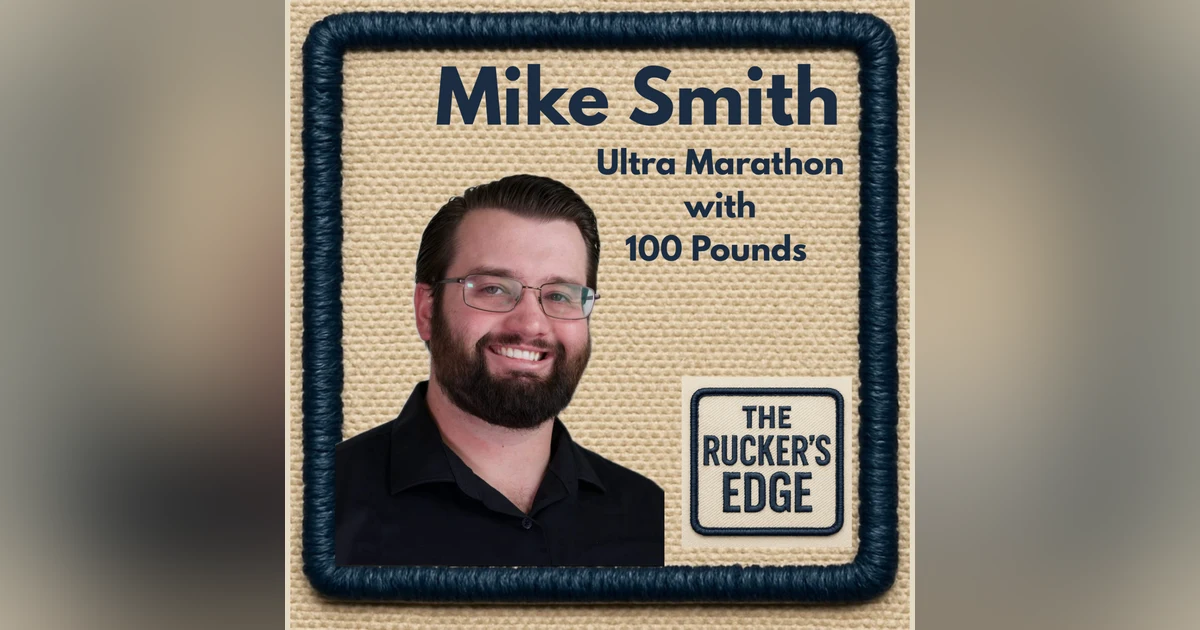


Today we’re joined by Mike Smith, who has been training for some ambitious goals. Mike shares why rucking for weight loss has been a game-changer in his fitness journey and how it’s helping him pursue a significant fitness achievement.
Through consistent rucking and smart health decisions, Mike is on track to lose 100 pounds while also preparing to take on an ultra marathon with 100 pounds on his back this October.
In this episode, we cover:
- Why rucking is one of the most effective tools for weight loss
- Why he chose such ambitious goals
- Mike’s unique training plan
- How his business, Union Health and Fitness, is helping others achieve their health goals
After the show, check out the show notes at theruckersedge.com.
Resources and Links Mentioned
- Support Mike on his mission to complete an Ultra Marathon this October:
- Mike's custom built rucksack
- Union Health and Fitness
- Connect with Mike on social media: Facebook, Instagram, TikTok, and YouTube
- The Rucker's Edge on Instagram @TheRuckersEdgePod
👉 Next Episode Preview: I have a unique episode for you next week. I asked several experienced ruckers and leaders in the rucking community to provide their best piece of advice for new ruckers.
If you enjoyed this episode, please share it with a friend who’s balancing fitness and family life. Don’t forget to follow the show so you never miss an episode!
Notes:
- Music Credit: "Play This Game" by Black Rhomb
- I'm not a doctor, and this podcast is for informational and entertainment purposes only. Please consult with your physician before starting any new exercise or physical activity.
0:00 I think rucking is great for weight loss. It really does a few things why I think it works well. Steady state cardio is great for health, not just weight loss. The downside to steady state cardio is the more steady state cardio you do, the greater risk you have of losing lean mass. I really love it because in a program, either for myself or for my clients, you can add steady state kind of zone two cardio that's easy and it's really nice on the body and actually help the body recover and if you ruck with about 30 of your body weight you will decrease your chance of losing lean mass from your cardio significantly Welcome to the Ruckerâs Edge podcast, a show all about rucking that is designed to help you develop a rucking routine, lose weight, and ultimately gain your strength and energy back. Whether you're an office worker with lower back pain, a fitness first timer, or a new parent trying to get back to your pre-kids weight, this is the show for you. I'm your host, Spencer, and today we're joined by Mike Smith. Mike has been training for some pretty ambitious goals, and today he shares why rucking is playing a pivotal role.
1:12 Through rucking and other health decisions, Mike is on track to lose 100 pounds and is preparing to complete an ultramarathon while carrying 100 pounds this October. We discuss why rucking is one of the best mechanisms for weight loss, why he chose such ambitious goals, his training philosophy, and the services his business, Union Health and Fitness, provides. After the show's over, check out our show notes at theruckersedge.com. All right, here's my conversation with Mike. Mike Smith, welcome to the Ruckerâs Edge podcast. It's really nice to have you here today. The first time I saw you online was your post from June after you completed a half marathon with 100 pounds, and I thought that was crazy impressive.
1:55 And then I found out in a later post that you have even more ambitious goals ahead of you, and I have been itching to get you on the podcast to have this conversation, and I really appreciate you being here. Well, thanks for having me. I'm excited to be here. It should be a fun day. Agreed. So you're a rucker now, but from our pre -call, it sounds like you have a history of competing in other sports and athletic events. Can you describe your fitness background prior to picking up a rucksack for the first time? Yeah, so probably the main thing, I mean, obviously I did every sport growing up. I did a little bit of football and other things. But the main thing that I've done as an adult is MMA and jiu -jitsu and boxing.
2:36 So I've done a few fights. handful of jujitsu competitions. And then, um, for a brief period of my life, I got into strong man guy, actually pretty big out of like 350 pounds, just, you know, like lifting big rocks and stuff. And so that, I mean, as an adult, that's been most of the things that I've done is, uh, MMA and jujitsu and strong man. Wow. Now I'm super curious about the strong man competition. So like, what kind of training did you do for those competitions? Um, so strongman's kind of an interesting sport because how it works i only i only did one comp but when you train for it basically you find a competition you want to go to and they'll have a list of events that you have to you'll be competing in right so mine had five and it was a couple years back so i don't remember all of them exactly but it was something like a It was an Atlas stone over bar. I think it was like 270 or 300 pounds for reps. So you just have a two minute timer and you basically pick it up over the bar as many times as you can. Like a mystery item carry.
3:45 Mine ended up being a keg. It was like 250 pounds and it was just whoever could carry it the farthest in two minutes. And then had a pressing medley. So I had to lift some things over your head, like a keg and an axle and some different implements. I think it had a truck drag. So he did like an arm over arm pull and you had to pull a truck across to like a road. Oh, that's awesome. Things like that. So it's Strongman's. I mean, obviously, it's just based strength training, right? You'll do anything like you would for other strength sports. You're going to have all your classic static lifts. And where Strongman gets fun is you at any given event will just have, you know, five to six things you have to be good at. So you get to train for those things. I gotcha.
4:33 Wow. That's, that is really interesting. So you're, yeah, you're used to carrying, uh, or moving heavy things. I'm curious. So how did you discover rucking and, uh, what was your first experience rucking? Yeah. So I've, I've always in strongman, I loved moving events. Um, so like things like yoke, where you would just pick up a big heavy thing and walk with it or farmer carries where you carry it in your hands and walk with those were always my. my favorite events, how I first got introduced to rucking. I mean, outside of generally just carrying a backpack around for scouts or whatever, when I was thinking of rucking as a training method was actually, I had a friend who his name's Dylan, a really great guy. He has a medical condition that gives him limited use of his legs. And he had a dream to run a Spartan. And so we had a mutual friend, Kevin Livingston, who I met Dylan through. And we were talking about a way to make it so he could actually run a Spartan. We came up with the idea that we could carry him basically from event to event.
5:43 And then he could do the events that he wanted and was able to do with his upper body. So my first experience with that was actually just with rucking. I was training for that. He weighed 180 pounds. I got two things of tube sand from Home Depot, which I think they weighed like, I think it was like 60, 80 pounds each. And then I got just a 45 pound plate. I just kind of strapped that all to my backpack. I just had a backpacking backpack. It's an Eberly stock. okay i just started training with that and that was absolutely brutal i do not recommend um starting with 180 pounds yeah um and just in general i just think it was a big shift for me that was coming straight out of doing strongman right so i was 350 pounds and then we we did the eight mile uh spartan and it was in utah um lots of elevation change whoa um It took us eight hours. I mean, there was a couple places on the trail where you could almost like reach out in front of you and touch the ground. It was so steep. Whoa. But yeah, so that was actually my first experience with rucking. And the reason I immediately fell in love with it, because at that time I was trying to transition out of strongman back into grappling.
7:02 And so I wanted to lose a bunch of weight. And the biggest fear with losing weight is always losing muscle mass. And when I was doing the, you know, the rucking where I was basically just hiking. I'm here in Utah with 180 -pound pack. I was losing weight rapidly. I could tell both from body composition scans and just by performance that I was gaining muscle mass, which was really great. That was the first experience I had with it. The Spartan went great. We ended up completing it. It was honestly one of the coolest moments to see Dylan. I honestly tapped out. I finished it with him. Me and Kevin switched off and on for probably about the first seven miles. And then the last about mile, my legs were just shot.
7:49 And he pretty much did the last mile by himself, carrying Dylan kind of into the finish line. I mean, I could imagine. Yeah, your legs had to just be burning. Yeah, it was the first time I had ever worked my legs to complete failure. So if I stood up, they would just lock out and Charlie Horse and I would just kind of baby deer and fall back over. Yeah. And so. That was, you know, I think part of it was also just I wasn't used to competing for eight hours. Right. So I didn't have a nutrition plan. I didn't understand, you know, how to, you know, rehydrate and do those type of things I do now. I see. But yeah, it was great. And then at the end was such an amazing moment. The whole time we were training, Dylan just kept saying how much he wanted that T -shirt. They give you a. a t -shirt at the spa and we crossed the finish line and he sat down back in his wheelchair and we were all just like beat up and exhausted and they handed him a t -shirt and he just started crying because he was so happy oh man that's amazing it was just a really awesome moment um and that was kind of where i got started with rucking and then honestly after that i didn't touch it for a couple years um because i just was doing other things I gotcha. Well, good for good for you, Kevin and Dylan. That's amazing. What a great story. So that was where you started. Now I'm super curious about where you're going. Now, I saw on some of your socials, you have this really ambitious goal of doing an ultra marathon
9:21 with 100 pounds strapped to your back. And, you know, I guess I'm curious, what is an ultra marathon? Is that is it 100 miles? Is that what ultra is? So I'm doing a 24 hour ultra. So mine's going to be a little bit different. I'll just basically have a 24 hour limit to go as long as I can. Um, so it's going to be a, just over a four mile loop and I'll just go as far as I can in 24 hours. There are people who can run a hundred miles in 24 hours. I am not one of them. I'm pretty big myself. Even after losing a good amount of weight for this, I'm still going to probably be about two 60 to 70. And then with the hundred pounds, so you can imagine a 360, 370 pound guy running for 24 hours. It's not very aerodynamic.
10:13 And so I'm hoping to break about the 50 mile ski, hopefully landing somewhere between 50 and 60 miles is what my goal is. So 50 miles I'd be stoked with. And then kind of the next. distance that people do in ultra marathons is 100 kilometers which is right around 62 miles okay so anywhere between 50 and 62 ish miles i'd be pretty happy to get a lot of it's just a time game it's it's hard to know how fast you're going to be able to go later on right so when i'm training i usually can average about a 17 18 minute mile but that's only for you know two days ago i did 20 ish miles 21 miles and there's a big difference between 20 miles and 60 oh sure yeah so it just depends on how quickly i can i can do it so and it's certainly different than the eight miles you did for the spartan i mean that's huge yep yep yeah and and luckily the terrain's way better right i mean we're not just hiking up the side of a mountain this is going to be on like a nice paved loop basically So what drew you to this specific challenge of doing the 24 -hour ultra with 100 pounds? The big part of it is I'm using it as a publicity event to raise money for mental health and suicide awareness. That's kind of how I got back into rucking. I won't get into the full details because sometimes it can be a little bit of a downer and it's a heavy topic when we talk about it. But in 2020, I had a really
11:47 rough stint in life that... took, took its toll on my mental health and, uh, kind of pushed me to my limits. Um, I have plenty of media. If the listeners want to go listen to it and hear it in detail. Um, and really the thing that kept me going was my daughter. Um, I got to a point, I basically received a lot of injuries. I had a severe concussion and I got a condition called pneumomaniac, where you basically, the lining of your heart fills up with air. Um, And this was right when I was basically, I was doing my master's. I had started a company and I just had my first child. Wow. Right when we found out that my wife's employer lied and we weren't getting a paid maternity leave. So then I had to go and get another full -time job. Oh my gosh.
12:39 Yeah. And so basically there's just all of these things were happening all at once. I didn't realize at the time how much I relied on exercise for kind of my mental health and stability. And I think anyone can kind of be tough when they have armor on. And when you take away those things that ease the pain, that's when it gets hard. And when I got both the concussion and then the heart issue, I couldn't do any of the activities I would normally do to basically blow off some steam, right? You can't go grapple. You can't spar when you have a concussion. I was to the point where if I walked up the stairs too fast, I'd get pretty bad chest pain, would have to sit down for an hour or so and let it, you know, kind of let the chest pain die down from the air stuck in my chest cavity. And at kind of my lowest, I knew I had to do something physical to start to rebuild my health. And my daughter was really the thing that was keeping me going.
13:36 I had this brand new baby, so I was like, I got to keep going for her. And we had a little loop. um around our apartment complex and i would literally just pick her up and i just go walk around that loop and that was like what my exercise was um that's fantastic i started doing that yeah um i did it you know the first couple days was just one or two loops and then i got to the point where i was going longer and longer and i got one of those like little baby carriers yeah um yeah and then i would you know go on like a couple mile walks with her and and then at one point i had a I was actually like starting to feel better. And I had a weight vest just for other training things I was doing. And I think it was like 60 pounds. And I was like, I'm just going to go see how far I can go. Right. It was the first time in months I was feeling better. And I threw on a 60 pound pack and went for about eight miles. And I was like, Hey, like, I really liked this. Like this was a good workout. And I, there was something about rucking and kind of that. It gave me a lot of control to both.
14:36 You could increase weight or increase distance. And when my body was kind of in that healing stage in that first three or four months, getting over those things, that was really nice. Because it was something that I could really dial in the difficulty. And if I was feeling dizzy or was getting chest pain, I could always just turn around and come home. And so after that 60 -pound vest day, I just kind of kept pushing it and pushing it. And I got up to where I was doing 100 pounds. I actually attempted a marathon once and it didn't turn out great. That's a story for another day. Now, fast forward three or four years later, life's much better. Ever since then, suicide and mental health has always been very close to my heart. I thought, hey, this would be a cool way to do one last big thing with rucking and then also try to raise some money for a charity.
15:38 So I was thinking, obviously not very quickly, so I wasn't going to set any speed records. And so I was like, I wonder how far I could go. And there was a local race who was willing to partner with me. It's the Happy Trails race organization here in Utah. And they had a 24 -hour race going on. And they were like, yeah, you can just basically go as long as you want for 24 hours. Partner with them and then with the American Foundation for Suicide Prevention. And we're just doing a fundraiser, trying to raise awareness and funds for those people who are kind of suffering with their mental health. Mike, that is that is fantastic. I think that is such an amazing. A foundation that you've chosen to partner with, excuse me, in the American Foundation for Suicide Prevention.
16:26 That's also something that's kind of personal for me, too. I've had some experience with loved ones and friends that have had, they were in dark places and, you know, thinking that there was only one way out. And it's incredibly heartbreaking when you find out that they've been struggling with that and you don't see it until you hear some news. Hearing your story, you had three to four monumental life changes all happening at one time. I can't imagine the toll that you were going through. And on top of that, having the news that you weren't going to have the maternity pay and finding another job on top of it. That's a crazy amount of stress. So, I mean, it's kind of no wonder your body was taking a toll and then not being able to work out. That's I mean, that's how I maintain a healthy level of. you know, my, my mental capacity is by exhausting myself and working out. So yeah, remove that.
17:23 That's like a whole other element. And then you have a concussion. That's like, it's a, the perfect storm of, of some sort of mental decline. And I'm really, really happy that you found your way out of that dark place. And now you're raising awareness and really turning it into something really incredible. So Mike, that's awesome, man. Yeah. Thank you. Hopefully, hopefully it can help people. It's, it's hard. I think, you know, growing up, I think I kind of had a lot of pride in kind of being that like, you know, classic masculinity and just kind of toughing things out. And, you know, I always joke like a force doesn't work, apply more force. And, you know, I think that was the first time in my life where like that method finally broke and it didn't work anymore where I was like, Oh, like life finally made me yield. And it was really hard.
18:10 I think. I think we're in the same boat where we use physical activity and kind of pushing our bodies to cope with mental stress. I think sometimes we have to realize that some of us who think we might be like the toughest individuals realize that we're walking on really thin ice because when you take away those outlets, you realize how quickly you have some deeper issues you need to work on that you maybe haven't. That was something that was really interesting. Having to go back through and be like, hey, when it's not about me and when it's gotten to the point where even my ego, which I thought was impenetrable, to be honest with you, wasn't enough anymore.
18:52 What is it that keeps you going? For me, it was like, I have a family. That's the one thing that's bigger than me that I have to keep going for. Rebuilding yourself in a new way. Hopefully, No one else has to go through that, but that's always something I, I tell people when I kind of run into men or women in my position where they really use physical activity as their only outlet is you have to, you kind of have to have a backup plan because if that goes away, it can be a really, it can be a really slippery slope very quickly. That is an, that's an excellent point. Thanks for bringing that up, Mike. And I want to switch gears from, uh, from your goal of, uh, of rocking with a hundred pounds, but you also have a separate goal of losing a hundred pounds as well. How's that going? How much have you lost so far? Um, so kind of depending somewhere between about 70 to 80 pounds, depending on where you're counting from. Um, so the biggest I ever got was three 50. Um, I'm about two 70 is my recent low weigh in. Um, okay. And from, so that's, that's 80 pounds. Um, From when I kind of started this, I was around like 243. So I think I counted it started at like 240. So I think I'm down, you know, that'd be about 70 pounds. I'll probably get down to somewhere around 260 to 265 by race day, which is about a month from now. And then
20:23 I'll finish hopefully losing the next, you know, 20 -ish pounds in the rest of the year. And if my projections are correct, I'll probably have to lose about 125 to hit my kind of my goal body fat percentage. Wow. But yeah, no, it's going really well. I'd say 80 pounds, man. People struggle to lose five pounds. I mean, that's tremendous. And I want to hear about your process. And I know in some of your posts, you talk about your training cycles. Can you walk us through what a cycle looks like for you? Sure. Yeah. So in general, um, I usually run eight week cycles.
21:04 They're broken into two mesocycles. So basically two, four week periods. And so, uh, they progress in difficulty for three weeks. So weeks one through three get harder. And then the fourth week is a rest week. Um, and I'll basically do that twice and then make all new workouts. Um, so with like my strength training, that means every eight weeks I, you know, find, you know, We'll start over a whole new workout cycle and get new exercises and that type of stuff. As far as rucking goes, there's kind of a few phases I went through. The first phase with getting ready for this was since I was so big starting out, I was like 340.
21:47 Having a 100 -pound Pac -Man, I had 400 -something pounds on my feet when I was walking. And so just getting your body used to carrying that much weight was kind of a rough thing in itself. So the first, you know, five, three, probably three to five months was just slowly building up tolerance to the pack itself and working out the details and, you know, building the pack and finding out how it worked with the very best. And then the second phase after that was just getting mileage up. So then I got mileage up to about 60 miles a week. And now I'm in the last phase, which is just basically every three days I do almost kind of a mock event. So now I have the mileage and the base is built. So now I'm just trying to get good at what I'm planning on doing. So two days ago I did 21 miles. Tomorrow I'll do 26. And then just kind of slowly build on that. But in general, going back to kind of what the training periods look like. You know, when I was building up mileage, that would mean, you know, for three weeks, I'd increase mileage weekly. My rucks would get longer on that fourth week. I would take off the pack and kind of just repair all the damage I had done. I like to think of when I talk with people about how your training cycle should be like week one, you should show up and be doing what you need to to get the results.
23:12 Week two, you build on that. Week three, you go as hard as physically possible. I always call it peak week where you kind of leave nothing in the tank and you're trying to. push your body as hard as it can. And then week four, you're just fixing the damage from everything you just did. Okay. So I decreased lifting volume, a bunch, uh, rucking, you know, your distance gets decreased a bunch. I take off the pack and I'm just doing normal walks. Um, I actually think that's really important. I think sometimes I see a lot on like Facebook, the Facebook pages. I'm on the rucking. People are always talking about getting faster. I think one of the best things is like periodically taking off the pack and just walking quickly and like let your body get used to moving quick again. Um, because I think you get, you naturally kind of slowed down when you're carrying the weight. But yeah, so, um, that's, that's basically what the, the overall outlook of it looks like is, uh, three increasing weeks and then kind of a deload week. And then I do that twice and then we, I'll switch up the entire. Very cool.
24:15 Yeah, I'm a huge advocate for taking recovery rucks or just time off in general. Yeah, I recently did that. I kind of went on vacation and I just did some pretty, pretty slow rucks in my first ruck back. I was like set in PRs. It was pretty incredible. And that was like eye opening. It's like, yeah, maybe I should do this a lot more regularly. And then like reading into it, it's like, yeah, you're going to decrease the amount of injuries you could. incur if you don't take breaks. So yeah, I've definitely built that into how I ruck as well. So in our pre -call, I think you had disclosed that you have a master's degree in nutritional science and you seem to be all in on rucking. So is it safe to say that you have a strong opinion that rucking is a great exercise for weight loss? Yeah, I think rucking is great for weight loss. It really does a few things why I think it works well. steady state cardio is great for health not just weight loss the the downside to steady state cardio is you the more steady state cardio you do the greater risk you have of losing lean mass right like no one's ever looked at like a marathon runner and be like man that guy's jacked right like typically we we it's pretty easy for us to understand that so one of the things that's nice about i really love it because in a program either for myself or for my clients You can add steady state kind of zone to cardio. That's easy and it's really nice on the body and actually will help the body recover. And if you rock with about 30 % of your body weight, you will decrease your
25:46 chance of losing lean mass from your cardio significantly. So during this entire time, like I said, I'm down about 70, 80 pounds. I've been tracking it with a lab -grade body composition. So if you know what a bod pod is, I'm not, I, I do also just for my, uh, corporate wellness program, I own basically like a, an in body type machine, like a higher end bioelectrical impedance. Wow. But for myself, I go, I go to, uh, like the lab I used to work in at school and get, um, you know, paid to have like lab grade testing done. And I've, I've not lost it really any lean mass during the. During the 80 pounds of weight loss, which is really, really important because like you said, when someone's trying to, you know, you grew up people losing like five pounds or 10 pounds. If you're losing, you know, one out of 10 pounds is muscle. When you lose five pounds to 10 pounds, it's not that big a deal. In my world where I'm a lot of times helping with large scale weight loss or myself where I'm trying to transform, you know, transform my body. If you're losing 120 pounds, 12 pounds of lean mass is a lot of lean mass. That's probably as much lean mass as people are going to put on within a couple years of serious strength training.
27:06 Why I love it so much for weight loss is because it really is protective of lean mass. It helps you stay in a caloric deficit. I think it really helps the body recover. That's why I got into rucking. Like I said, it's an easy way to go out and get your body moving without banging up your joints. And so I love it for weight loss and body recomposition. Very cool. And, you know, I'm also curious about something you mentioned before. You mentioned something about nutritional timing. Can you talk a little bit about that? Yeah. So nutritional timing is what I focused my research on when I was doing schooling. I'm a huge fan of caloric front loading. So I get most of my calories in the morning. And how I typically do caloric front loading is. I kind of break up my protein evenly throughout the day and then I move most to all of my carbs into the morning. So breakfast time is kind of the only time I get high glycemic carbohydrates.
28:07 So anything like breads or pastas or if I'm going to eat sweets, sweets and stuff like that. By one o 'clock, I'm completely done with any of that. Usually even by about 11, I've kind of switched to if I'm getting carbs or fruits and vegetables. And then, um, after one, any, any carbohydrate I'm getting is, is going to be just be like a low glycemic vegetable, you know, like a, I think what most people think of like a low carb diet, right? So, you know, broccoli, asparagus, and then I'm mostly just focusing on like lean meat, um, protein sources. So, okay. Um, caloric front loading is great. Once again, the research that we did showed that it's protective of muscle mass during caloric deficit. Okay. So. basically you lose less lean mass when you calorically front load we did a study where we basically put half the group was eating a big breakfast and the other part was eating a big dinner it's actually a crossover so they would do two weeks and then switch and then do two weeks i really enjoy it there's a lot of really good health benefits to it with weight loss it's really great because the other thing that's been shown really clearly in literature is it reduces hunger throughout the day so if you're somebody who you really struggle with like feeling hungry if that's one of the things that you like is you know when i work with clients some of my clients like that's their big hiccups right now i just feel like i'm starving typically what happens when you eat more in the morning is it increases satiety throughout the day so you're less hungry throughout the entire day oh interesting yeah this whole
29:38 kind of branch of research started from a study done by a woman named daniela jacobowitz where she did a big breakfast versus a big dinner for 16 weeks both Both groups were instructed, right? I say instructed because it's really hard in nutritional research to get people to do what they're supposed to, but to eat 1 ,500 calories. And the big breakfast group lost over twice the amount of weight in that 16 weeks. And as follow -up studies have gone through, they basically are able to show that the main thing that it's coming from is you end up eating less because you are... you're more like satiated throughout the day. And then also you hold on to lean mass more when you're in a caloric deficit. Cool.
30:22 I appreciate you educating me on that. Yeah, I had no educational background in any of this. So it's all fascinating to me. Now, moving on, you're the owner of Union Health and Fitness. So what is that? And who do you serve? What are their goals? Union Health and Fitness, it's an online health coaching company. So I basically, I have clients that are from California to Florida, kind of across the nation. Generally, the two kind of groups I serve the most is people looking for general wellness, just trying to look better, feel better, live longer type stuff. I do a lot with weekend warriors, right? You know, people either doing ultras or, you know, stuff like that as well. But then the other thing that I specialize in is large scale weight loss. So I've helped several people now lose over 100 pounds naturally, right? Like no steroids, no ozempic. just through diet and exercise and basically adjusting your relationship with food. One of the main things we do is large scale weight loss.
31:22 So if someone needs to lose like 50 to 100 plus pounds while in school, I basically came up with an algorithm that helped me measure metabolic adaptation. And so it helps me keep you consistently losing weight where we can make sure it's all fat and not muscle. So that you can get to where you need to safely and you don't end up messing up your basal metabolic rate and lose all your lean mass. Because the scary thing about weight loss is most people are going to regain some of it, if not all of it, if you don't make proper precautions. And so worst case scenario, obviously, is someone loses 100 pounds and 20 of its muscle and then they regain it. And then they don't have that lean mass. You can only do that so many times. One of the big things I focus on when we're training is making sure that people are losing weight, but they're losing very high quality weight so that they can do it safely and actually maintain it once they get to where they want to be. I see. If someone listening is overweight or they want to lose 50 to 100 pounds and they're just starting their journey, what's your best advice for getting into rucking without burning out? One of the main things, if you're a bigger person, Proportionally, you're probably going to be rucking with less weight.
32:45 So I think there's that temptation to be like, oh, I'm a big, strong guy. I can just throw on 60 pounds or something like that. We're already carrying a lot. And so one of the things is just making sure to start really slowly. Start with even 5, 10 pounds and just build up on it. It's always easier to add more. It's really hard to rehab an injury once you've blown up a knee or a hip or something like that. And so when someone's starting out, like always just figure out a way to make it fun. Um, when I started rucking, you know, the, the second time around, like I said, it was just literally something out of necessity where it's like, it was just a walk with my kid.
33:26 Like it wasn't even rucking, you know? I mean, I guess she weighed 15 pounds. Right. But I mean, that, that was it. Like, and that's where it stayed for a while. And then slowly I added weight. Um, but I think. Having that mindset, going in and knowing, hey, I can shoot low and then build on it is always great with fitness goals. Then just having some type of realistic plan to build over time. Then at the end of the day, and this may not be the best way to answer the question, is if you get burnt out and it's not fun, move on to the next thing. Yeah, you know, I'm not gonna lie to you. I am already to the point where I think once I'm done with this ultra, I'm probably not putting on that backpack for a couple months.
34:10 Yeah, you know, I totally get that. Yeah, go find something else that'll keep keep you on your fitness journey. Yeah. So as long as you're safe, and just start slow, and then slowly increase kind of as you lose weight and take care of your joints. That's, that's where it's at. And it's always keep fitness fun. I don't believe people really have willpower. I don't think that's how we work. I think people do what they want to do and what they have to do. And when it comes to our health, if it's something that we want to do, we probably, if it's something that we feel like we have to do, we'll do it. But if like, it's not something we feel like we want to do, it's probably just not going to get done. Awesome. I really like that. Yeah. I don't, I don't, I've never seen it in my practice where I have someone who like hates exercise and hates all these things. still just does it for a long period of time. I don't think that exists. I don't think even willpower your way into a new lifestyle. I think it has to be something you enjoy. More with Mike in just a moment, including a description of the custom rucksack he made and how he helps other people drop weight without losing strength. But I want to take a quick break to say thanks for listening to the podcast. Please share this episode with a fellow rucker that might be interested or a friend that could benefit from rucking. Sharing this episode would help the show grow and help more people improve their health and lives. Okay, back to it. You posted photos of your rucksack, which you stated that you made. This thing is impressive. And I'll post a link to it in the show notes. It's really,
35:41 really cool. But can you tell us a little story about the custom rucksack that you built and what inspired it? Yeah, so the thing that inspired it was a complete failure of the first time I attempted something like this. I mentioned earlier in this podcast, I attempted a marathon. And all I had at the time was like kettlebells and sandbags. And so I put like a really heavy sandbag on the backside, which I think weighed like 20 pounds. And I just had like a backpack that I literally tied a kettlebell in. yeah and it kept breaking the whole time i was trying the marathon so i think i ended up doing like 23 miles that day and then just didn't finish it because i was out like seven hours or something but um it kept everything just kept falling apart and kept breaking so i realized like okay i have to have something that is going to be a little bit more secure and work better the other thing was i realized that um i was talking to my friend tim who was a marine so did tons of rucking these type of things and he said that the higher you can get the weight the, the better it'll, the more comfortable it'll be. Right. And so what I realized is I actually ended up giving myself a lot of kind of like hip injuries because the weight was so low in the ruck pack. It was kind of down on like the, I have the Everly stock mainframe. So it's, it's one of those packs that has kind of an L shaped frame. And I had everything just sitting on that L like on the bottom. And so I was leaning really far forward, which was causing like a lot of issues with my hips. So the goal behind building this was basically to
37:13 make the weight as high as possible. And so, um, and then also secured. So, uh, me and my friend Elijah, basically we, I got an inch and a half tubing and we just cut it and then welded it into a frame. And then I filled it with the, uh, sand that comes in those like sandbag weight vests. I mean, is that black iron sand? Yeah. So that got all filled up. Right. So I think the frame itself weighs like 15, 20 pounds. And then on the frame, we basically welded on mounts where we can, I could move around. They're actually the plates from like an old set of adjustable dumbbells and just screw them into the pack itself.
37:58 So the frame basically comes up all the way up my back and then kicks forward about 10, 12 degrees. So it kind of comes up over my head almost a little bit. And then I have probably. 60 ish pounds on the very top um and then inside the frame i added some more probably the other 40 of the of the um those kind of adjustable dumbbell plates it looks it looks ridiculous um i'm sure i look silly i think it just looks it looks intense and it looks like you're methodical about designing it and yeah it's like the first rucksack that i've seen where the weight's kind of coming over somebody's head it's really it's really cool and like the the uh i guess the weights that you have they're kind of uh there's like a piece sort of missing from it it looks kind of like a pac -man yeah it's like it's the most unique rucksack i have ever seen i was like man i gotta ask mike about this this is so cool We're getting close to the end here, but before we jump into the rapid fire round, Mike, I wanted to thank you again for coming on to the podcast and talking about your wrecking goals. Some really incredible accomplishments, and I'm happy for you. I'll be donating to the American Foundation for Suicide Prevention for your cause, and best of luck to you. I'll be pulling for you. I'll include a link in the show notes where listeners can go and donate as well. If people are interested in seeing if Union Health and Fitness can help with their weight loss journey, how can they get in touch with you? I can probably give you a link for the website, but it's just unionhf
39:30 .com. Perfect. If people are looking for that, I can give you a link there. I'm also on Facebook, Instagram, TikTok, and YouTube. It's Union Health and Fitness, I think, on all of them. I'll put those links in the show notes as well. Is there a way for people to track you as you do the ultra? I mean, I upload constantly to all of the different social media. And I'm sure I'm probably going to... I mean, obviously, probably not live stream all of the 24 hours because that would be monotonous. But while competing, I'll be updating people. So if they just follow me on any of the social media, they'll get plenty of updates the whole time through. Gotcha. This week, I have been watching, I guess... Yesterday and today, I've been kind of peeking into Go Rucks selection.
40:17 They have that going on right now and they're live streaming it through their Instagram. It's been really impressive to watch. And I was just curious if you're doing anything like that. But I know you post on the Facebook Rucking Group, so I'll definitely keep tabs on your progress with that. And again, good luck, man. Okay, so let's move into the rapid fire round just to wrap things up here. You've already talked about your first rucksack. I love hearing people's... first rig and how they get creative and everything but the first question is if you can only ruck one trail for the rest of your life what trail would that be probably the y i mean it's terrible it's not a in provo there's a hike up to the the big y on the side of the mountain um okay which is a mile like straight up It would not be for enjoyable purposes, but it's like one of the best leg workouts that there is, in my opinion, is hiking that thing. Gotcha. I like that choice. What's your favorite non -rucking workout? Probably combat sports. I love grappling and fighting. It's a lot of fun. And what do you listen to when you're rucking? I see you have some headsets on when you're rucking. Some AirPods, maybe. What do you listen to? People are going to laugh at me. honestly mostly audiobooks and my taste of audiobooks is when I my entire life I've never read any book fiction ever I always just read non -fiction I'm kind of a nerd that way and my wife got me hooked on all of
41:48 the like romantic novels and so actually most of the time i'm listening to something like a romantic novel wow did not i would have never guessed that yeah i know it sounds it sounds funny i uh just something some type of story you can get lost in um i mean i'm just doing a lot of hours and so you get burnt out of music right i mean yeah yeah i'll probably be out there for seven hours so hey man that's what i listen to Alright, last question. What is your bucket list wrecking trail? Oh. I've seen those guys who go do the marathons or half marathons in Antarctica. I think that would be cool. I don't know if that's a trail, but I think to go explore Antarctica would be pretty. Oh, sure. Pretty fun. Yeah. I mean, I'm here in Louisiana where, well, I guess historically it doesn't snow. It actually, we had a lot of snow this past winter, but yeah, to be able to rock in snow, that would be really cool. And then to do it in an environment, something like Antarctica, I'm right there with you. That would be awesome. Well, cool. Well, Mike, thanks again so much for joining me today on the podcast. Really appreciate it. And best of luck to you with Ultraman. Thank you, sir.
43:00 Have a nice day. All right, that wraps up my conversation with Mike Smith. I hope you picked up some valuable takeaways. I enjoyed hearing how rucking helps preserve lean mass while dropping weight personally. You can connect with Mike at unionhf .com or on Facebook, Instagram, YouTube, or TikTok at unionhealthandfitness. I'll drop those links in the show notes. If you want to reach out to me, head on over to theruckersedge .com or on Instagram at theruckersedgepod. If you enjoyed today's episode, make sure you follow or subscribe so you're notified of new episodes. And you're not going to want to miss next week's episode because I reached out to a few leaders in the rucking community and a few accomplished ruckers and asked them to share their best piece of advice for new ruckers. They provided some really useful and inspiring guidance you're going to like. Okay, that's it for today. Thanks again for listening to this episode of The Rucker's Edge.