Rucking in the Snow and Ruck Design with Dan Vinson from Wild Gym



Rucking doesn’t stop when the weather turns cold. But winter conditions introduce new challenges that ruckers need to be prepared for.
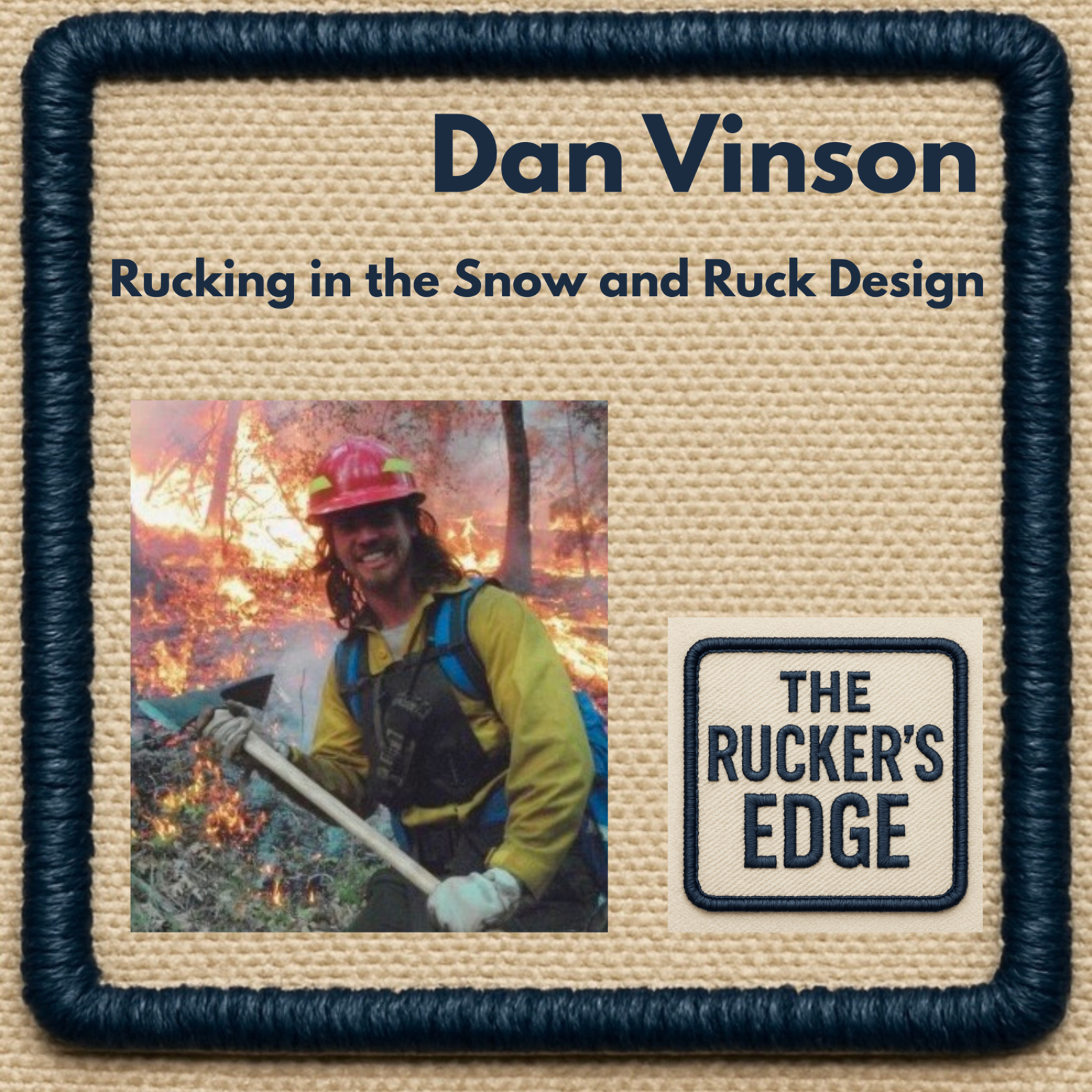
In this episode of The Rucker’s Edge, Spencer sits down with Dan Vinson, founder of Wild Gym, to break down what it actually takes to ruck safely and effectively in snow and cold weather. Drawing from decades of experience as a mountain athlete, wildland firefighter, and pack designer, Dan explains how rucking in the snow differs from warm weather rucking, and where the fundamentals stay the same.
The conversation covers how snow and ice affect footing and balance, why traction is often more important than footwear, and how layering correctly can prevent sweat-related cold stress. Dan also explains why most people overdress for cold-weather rucks, how starting slightly cold can actually improve performance, and why downhill rucking is often more demanding than uphill work in winter conditions.
Dan also shares his insights into ruck design, including:
- Why weight should stay high and tight to the body
- How pack design affects energy use and stability on uneven terrain
- The role of rigid frames, hip belts, and adjustable torso lengths
- Why unstable loads become more dangerous in snow and ice
Whether you’re rucking in a mild winter climate or deep into snow season, this episode provides real-world guidance to help you train smarter and reduce unnecessary risk.
Links & Resources
- Wild Gym – Official Site
- Follow Dan Vinson on Instagram: @wilddanvincent
- Follow Wild Gym on Instagram: @wildgymco
- The Rucker's Edge – Official Site
- Follow The Rucker’s Edge on Instagram: @theruckersedgepod
Notes:
- Music Credit: "Play This Game" by Black Rhomb.
- I'm not a doctor, and this podcast is for informational and entertainment purposes only. Please consult with your physician before starting any new exercise or physical activity.
0:00 Have you ever seen people rucking through snow and ice and wondered whether that's smart training or just asking to get hurt? In this episode, we break down what actually changes when you ruck in cold weather and snow, what doesn't change as much as people think, and how to approach winter rucking safely and confidently, even if you've never walked on snow before. You'll learn how traction affects stability, how to dress so you don't sweat yourself into trouble, and why pack design matters more when footing gets unpredictable. My guest today is Dan Vinson, founder of Wild Gym, a mountain athlete and former wildland firefighter. Dan shares practical experience -based insights on winter rucking, gear selection, and how to manage load, balance, and fatigue when conditions get real. You're listening to the Rucker's Edge podcast, a show all about rucking that is designed to help you improve your rucking routine, lose weight and ultimately gain your strength and energy back. Each episode dives into the science, stories and strategies behind rucking. You'll learn from top ruckers, coaches, health and fitness experts and performance specialists who break down what it takes to train smarter, recover faster and stay ready for the next challenge.
1:02 So whether you're new to rucking or an experienced rucker that's already logged hundreds of miles, this is the show for you. I'm your host, Spencer. Thanks for listening in. As someone that lives in a hot and humid climate with very little exposure to snow and ice, I can't help but wonder how different it must be to rucking in a cold weather environment. I wanted to learn what it's like rucking on snow and ice, and I couldn't think of a better person to have on the show to have this discussion than Dan Vinson. I had loads of questions about what it takes to successfully ruck in the snow. So a few listeners that are used to rucking in snow, I apologize. This episode may not provide as much value as our other episodes, but I encourage you to stick around still because Dan goes into detail about the construction and design of the Wild Jim rucks. And he also teases an update to one of Wild Jim's products. All right, here's my conversation with Dan Vinson.
1:49 Dan, thank you so much for joining me here on the Rutgers Edge podcast. It's really an honor to have you here. I have a lot of questions for you. As I mentioned in an email previously, I live below sea level in a very hot climate, and you live well above sea level in a very cold climate. So I want to talk to you about rucking in the snow, and I feel like you have a lot of expertise to share with us today. So thanks for joining us today. Yeah, no, thanks for having me, Spencer. I want to start with your background, rucking. How long have you personally been rucking? And I guess what originally drew you to rucking for fitness? So I was a Division I college athlete. I played lacrosse in college. And training has always been a part of my life. I went to a prep school for high school. I was an All -American in high school. And just training was always very integral to my, I guess, athletic success.
2:39 I'm not that big of a guy. I'm like barely 5 '8". So I'm just not that big. So training was very important. I can't remember the first time I rucked intentionally, but what I would also add is, so I was a college athlete. I was also a wilderness ranger and wildland firefighter. So backpacking or walking with heavy packs was just, that's been something I've been doing since I was in high school. You know, we'd go backpacking in the Sierras. I grew up in the Bay Area, California. So I've been carrying weight. for most of my adult life i didn't know there was something called rucking until maybe i don't know four or five years ago i would just call it you know going for a heavy hike or going out with my heavy pack or when i was firefighting we would do pt hikes is what we called it so okay rucking it's been a part of my life like i said most of my adult life but i it's something i've leaned into more and probably the last like i said maybe four to six years particularly for bow hunting I'm not here in Colorado now. Archery elk hunting is like my new favorite thing in the world. And that's something that involves carrying a heavy pack for long distances up and down steep terrain.
3:49 So it's something that's just kind of become a part of my life. Oh yeah, no, absolutely. And like, so are you going on like intentional fitness rucks or are you just going out in the back country with a heavy pack and kind of killing two birds with one stone, getting a workout at the same time? Yeah, so it started early on. My wife likes this story. On one of our first dates, we went for a hike and I put like a 15 -pound dumbbell in my backpack. And that was like a very early ruck. Yeah. But to answer your question specifically, yeah, I ruck at least once or twice a week. A buddy and I meet up early in the morning and go out on the trails here, rain or snow, hot or cold. And I do intentionally ruck specifically all the time, as well as weight train, run. I do a lot of rock climbing as well. So I'm very much in the kind of Colorado, I don't know what you would call like mountain athlete scene, I guess, but rucking is very much an integral part of that. In addition to just going out on backpacking trips, things like that. Sure. Yeah. I've been seeing a lot of people posting videos of going on rucks and, you know, snow and ice conditions.
4:57 And I have some significant FOMO cause it just looks awesome. And it's 80. 81 degrees here right now so nowhere near snow and we don't get a lot of snow down here in louisiana last year was kind of a one -off we got like six to eight inches over a span of two one and a half two days something like that so i have no experience i have very little experience walking on snow put it that way i've been skiing about a dozen times and i'm a bona fide jerry at that so like maneuvering in ice or snow is not my forte but i'm curious like do you remember your first like heavy heavy hike in the snow or rock in the snow? I think back to, it was probably some backpacking trips early on where we were out. I was a firefighter in Montana and we went out early season, you know, June there, you can still get significant snow. Like I've skied the mountain or snowboard of the mountain. It snowed like 11 inches late June. So I've definitely been backpacking out there early season in the snow. But as far as, Like rucking here again, like I probably rucker run more on the trails just outside of Boulder.
6:07 There's awesome trails. I'm out there probably more in the winter than the summer. The summer I go up to the high country, but the snow does not shut things down here at all. Particularly in Colorado, we're high altitude, but it's a very dry climate. So the snow just isn't maybe as much as a factor as a wetter climate, maybe like Minnesota or something like that. But I don't think. I think if the cold is your reason for not going rocking or snow, I don't think that's really a reason not to, particularly with the biggest tip I would give. It's traction. I use, they're called micro spikes or what I use. Okay. There's a few other brands, but it's essentially like mini crampons that go over.
6:53 I just go in my trail running shoes. So I use like ultra. which one's ultra lone peaks, I believe is the model, but they just go right over shoes. You wear, I wear not even that warm of socks, just kind of a standard wool, like darn tough sock. And you're good to go. Particularly, you know, we're going up and down Hills. You don't need that much gear wise. Maybe I wear joggers and like a wool base layer, maybe a beanie, but yeah, it should not be an obstacle. I wanted to ask you about that. So it's like, yeah, you're walking on ice or snow. It's kind of unstable footing. How does that change? Like mechanically speaking, what changes first when you put weight on your pack and you start walking on snow and ice? I mean, I don't really think it's that different.
7:40 The only thing might be your stride may shorten a little bit. And the fact that you're wearing thicker clothes, maybe you have just more weight on you in general might slow you down a little bit. But I don't. think there's anything that really impacts like your mechanics unless you're in like deep snow. So this isn't rucking for fitness. This is just me out in the mountains. September, it snowed almost a foot when I was out archery hunting. So I'm essentially rucking and, you know, shin high snow. So that definitely changes things, particularly like each step is a lot higher. So you're just having to use your hip flexors a lot more, but. Again, it's when I'm out here just on the trails, there's not a huge change in mechanics. Gotcha. Yeah, that makes sense. But in terms of like load, pace and distance, what changes first would you say when you're going out for like a fitness ruck and you're going out in snow? Because I would imagine you may not want to carry the same amount of weight on your back unless you're super confident in your footing. Maybe would you adjust your weight? I don't. To me, it's this is my personal experience here because, again, Colorado. It gets cold, it snows, but it's just, it's such a dry climate. It's not the same as, you know, maybe if you're up in, so I'm just outside of Boulder. So we're at just under 6 ,000 feet.
9:00 The trails here go up to just under nine. But if you're up in the high country, you're starting at like 10, 10 ,000 feet going up to 12. So that's just a whole different scenario. But where I'm at, nothing really changes. I'm basically, I'm wearing, you know, maybe joggers and a wool long sleeve top and micro spikes on my shoes. maybe not even yeah and then the weight doesn't change i might slow down a little bit just due to the nature of you know maybe there's like the friction between my shoe and the snow is not quite as good or i can't go uphill quite as fast but again i wouldn't say it's that different yeah interesting is it someone had described rucking in the snow comparable to rucking in sand i guess would you find that comparable or not at all I mean, again, our snows here are so dry. If it's fresh, dry snow, I barely notice it. Again, I think it just depends. Our trails get pounded. There's so many people out here just running all the time, essentially, or hiking or whatever, that even after a pretty significant snowfall, the trails get packed down quite quickly. So that's one of the benefits of being in this particular area. I will say, like... and this is where i think the traction plays a huge is a big factor is so it'll snow it'll freeze thaw so you get that real undulating uneven surface that's probably the biggest factor here actually where it goes from smooth to kind
10:30 of like you know imagine if the surface of like a choppy lake froze so it's just this very uneven catch it drain that's probably the sketchiest for me where if i'm not wearing traction like spikes I've definitely fallen a few times. I think, I think that's just the one thing with rucking and just real areas that have real winter, like ice and snow is the top heaviness can definitely break you quickly. If you're not careful in the sense of you have all this load on top, you slip getting out of your car or whatever, you've got this weight on. It's just, you put your arm out to catch yourself. That I think is the biggest thing I would, I guess, caution people for. I can see that. And you called them micro spikes.
11:15 Is that what you said? So there's a brand, I'm pretty sure they're called micro spikes. Gotcha. And there's a few others, but real, the only difference is some of them have like longer spikes. Some of them have shorter. I find I use the shorter ones generally, but cool. Yeah. Yeah. Yeah, I'm not familiar with that. I know like snowshoes. I don't know. I'm trying to think like I ran track in high school. So I'm thinking like I had spikes. I mean, they're similar to that size, but you just strap on to the bottom of whatever boot or shoe you're wearing. And then, yeah, the chains for your shoes. Gotcha. Cool. Now let's talk about like, like thermoregulation and sweat. So I guess it's kind of like anything with exercise. Like I would imagine in Colorado, you're going on these like excursions or these rucks and just wearing layers and you just kind of shed them as you go. Is there like a go -to like jacket slash thermal system that you follow?
12:12 Like what works best for you? I've found that you need a lot less than you think. My general rule of thumb is start â if you're starting out cold, you're probably doing it right. If you're warm when you start, you're probably going to sweat through very shortly. So for me, it's just â and this is like probably down to maybe like single digits. So maybe 5 degrees, 10 degrees -ish up to maybe low 30s, high 30s. So it's â I just wear joggers, like Viore joggers. Nothing fancy. I wear wool. Darn tough socks, just kind of their standard hiking socks on the top. I'll wear a wool base layer. I'll wear a buff for like a neck gaiter, maybe a beanie, but oftentimes just like a hat, like a baseball hat and gloves.
13:06 And that's it. And the thing to remember too, is your pack, your ruck. That's a lot of insulation that I always forget about. So that actually keeps you quite warm. Yeah. Oh, yeah. I can imagine. I mean, yeah, it's been rucking down here in Louisiana and like 90 degree weather. You take the pack off. It's like stuck to you with all this wet that you have. Oh, for sure. I would imagine it kind of works to your benefit when it's cold. It kind of goes the opposite way. What about like decision making under environmental stress? Like how does the cold and fatigue start to affect decision making when you're when you're starting to, I don't know, get fatigued and while you're rucking or on a backcountry excursion? Right. I think my experience is less, my experience is less like I would say fitness rucks and more probably hunting's the best example, but you just, I just get lazy. It's like, you know, you've been out for multiple days. You're looking at the next ridge like, oh man, I don't want to go up and over that. Yeah. And I'll notice too.
14:14 My reaction time will slow down a little bit. So I'll just be a little clumsier, particularly going downhill. I think downhill is actually harder than going uphill in the sense of it's that repeated eccentric load on your muscle where your muscles lengthening under tension, essentially. I get way more sore from that than going uphill. For me, what I'm thinking is like, so if I rock at like 100 degree weather and like 100, you know. percent humidity outside it's like immediately tough so it's just like oh wow this is just a hard already and it just goes down fast and i was thinking maybe just wrecking in the cold you start out like super comfortable and then it's just like a gradual burn as opposed to just like boom it's already like really difficult i guess gotta get to a point i think the thing with the cold is it actually motivates you to keep going right because you kind of find this equilibrium where your body gets warmed up you kind of figure out your layering system and so you're not really sweating a ton you find this perfect example but as soon as you stop you get cold so there's almost an extra motivation in the cold to keep moving versus when it's hot it's like you can't escape the heat you know more with dan in just a moment including the thinking behind how he designed the wild gem rucks but i want to take a quick break to say thanks for listening to the podcast Please text this episode with a fellow rucker that might find it interesting or a friend that could benefit from rucking. Sharing this episode would help the show grow and help more people improve their health and lives. Okay, back to it. So let's
15:48 talk about rucksack design. You're the founder of Wild Gem. You have, I'm guessing, extensive amounts of research put into your packs. I want to kind of start out at base layer here. How does shifting weight affect balance and energy use during unstable conditions? I'm going to answer slightly roundabout way, but my intention with the design was to make something really comfortable. And what my issue was is... before we launched our wild gym rucks, I'd go out to train for like archery season. I'd go, I would, I had literally a 50 pound like ballast sack for like wakeboard boats. I'd put that in my, just backpacking Mike, my Osprey backpacking pack. And the problem was those packs are designed to be filled up with volume. So you throw this dense weight. It just, it essentially collapses the whole pack on itself. Same thing with you throw a cast iron plate. Like, most backpacks are meant to have the volume filled up. Like that's how they function best. When you put dense weight in these things, they just essentially, like I said, collapse on themselves. And what I saw was hunting packs, I thought did the best job of doing that or at least avoiding that, right? Because most hunting packs, they have this rigid frame. If you are packing out meat, you're essentially attaching that quarter in the same way. You do like a cast iron plate now in the ruck. It's high and tight on your back.
17:18 Instead of the weight being far away, like if you put it on the outside of your pack, it would pull you backwards. Just the leverage of it, right? So the closer it stays to your body, the less energy it takes. I have seen research as well where if you compare like a weighted vest to a ruck, ruck actually has a higher energy burn due to the weight. basically pulling you back slightly so you're all you're kind of having to engage a little more particularly your abdominals essentially i kind of have to pull your torso more upright but again the design was meant to allow you to one keep the weight as close to your body as possible so that it would be comfortable and then to disperse the weight over as much surface area as possible so what i noticed is when i was using like i had a trail running vest i literally put a 30 pound cast iron plate into and it just crushed my traps like there's just it was so uncomfortable after yeah that i'm surprised it actually held the 30 pounds yeah yeah yeah you'd be surprised like this so the stitching is quite strong but so i was doing that and i just essentially our first design so our everyday ruck That design is a hybrid between a hunting pack and a trail running vest. So it has, the trail running vest is surface area. So it's spreading the weight over as much, there's as much surface area as possible. And it essentially kind of hugs your torso from the front and the back.
18:48 And then the rigid frame keeps it tight and it keeps the pack from collapsing on itself. So there's a contoured frame. It's not straight vertical. It has like, as it goes up toward your... as it goes up your back into your thoracic it kind of curves over so it keeps the weight close and again that's to prevent that leverage where essentially the farther you get away from your back each millimeter is just going to add more leverage and then the new feather ruck that is even a step further where we still have that kind of vest inspired design but we have the built -in hip belt now so you've got even more weight distribution And it hugs just, it has a little more flex to it. So it just contours to you so well. And it's just very comfortable.
19:37 Does the everyday ruck not have a hip belt? Good question. It has a removable hip belt. Gotcha. Okay. But the feather rucks like fixed. Yeah, it's built in. And the main other difference is the feather has, you can adjust the torso length. So that's very important, right? Because if you were different heights. You need to be able to adjust that torso length to actually get the weight off your shoulders and onto your hips. So feather ruck has adjustable torso. Everyday ruck has, there's two sizes, but those are not adjustable. That was actually one of the first things that I had realized when I bought like a tactical bag to start rucking and I actually, I still use it. But as I was progressing, you know, I started out, I started out just walking, but then as I started throwing weight in the backpack, I guess I got up to, you know, 20 and then 30 and once i hit 45 i was like you know what i think it's time to start throwing on a belt so they had the manufacturer had one that you can add to it i'm like this is not doing anything i had it like way above where it should be on top of your hips and i was like well how can i adjust this and the only way to do it is to loosen up the strap so it's actually not high and tight anymore it's like low and loose and now it's like where it needs to be so i'm in this in between like do i high and tight or just like low and like potentially hurt my back just so i can pick it on my hips so i threw that i threw them away i'm like these are useless so the fact that you can adjust like how yeah and also my torso is a lot longer than like some
21:07 of my friends and like we're the same height i'm just like oh what is yours yours fits like this is not working for me so yeah the fact that you can adjust yours i think that's yeah that sounds crazy comfortable or just like to provide that option to to you know tighten it here loosen it here or vice versa that's pretty good yeah that's well because like for me i it's okay i want to be comfortable being uncomfortable like i'm gonna ruck harder i'm gonna ruck farther i'm gonna ruck faster if my traps aren't cramping you know and So that was the impetus really with our designs. And I will say though, you know, I think there's like a certain threshold you cross where if you want to rock with a hundred pounds, it's going to be, it's always going to be uncomfortable. You know, you kind of cross this threshold where it's just, you can't really make that comfortable, but you can at least make it. less painful well i'll say this i've met one person that's wrecked with 100 pounds kind of routinely mike smith actually he was on the podcast a couple episodes ago but anyway he made his own he took like an everly stock frame and like had it coming up kind of over the back of his head it was like so high but it looked looked like it worked for him it was he said it was pretty comfortable too but like i feel like yeah if you go that high you may have to consider like a custom build or something like that the design i've actually been working on that I just don't know how many people, the problem is what's the viable market, right? Like how many people
22:38 actually want to ruck with a hundred pounds? I don't know if it's worth, it'd be, I would like it. Like I would like something that's better, but yeah, the hundo ruck. We'll see. We'll see. I like that name. Comment, send us a note. If you're listening to this, let us know what you think. I like that name, but I'm still like, would it, what would the design be? Just. It'd be similar to the feather, but it'd have a much more rigid. frame and our pockets so we make our plates are they're about the size of a textbook so they're like nine by twelve roughly okay maybe like eight and three quarters by a little bit and a half something like that okay gotcha yeah so like i'm curious when you were putting when you were designing the everyday and then the feather rock are these your designs or did you hire like a team to come in and look at like what ergonomically like what's the most optimal positioning or you know shapes to contour the body i designed them all myself and it was just trial and error it was again like i've i think i had this unique experience where i've been my job right for several years was essentially walking around with a heavy pack most days i just have so much experience with this type of thing and i think it would i think kind of the maybe x factor was the hunting pack with the trail running pack and seeing i just it was one of those things where i don't know really where it came from i just had a thought like huh what if we kind of combine those two concepts which
24:10 are very i guess you could almost think of them as polar opposites but they had they each had these own features. They each had their own features that I thought would kind of the sum of the parts would be greater or excuse me. The sum is greater than the individual parts. So sure. That was really, that was the hypothesis. And then it was working with our manufacturer and just getting that. I'll never forget getting the first prototype putting on. It's like, Oh yeah, this isn't it, but it's going to work. You know what I mean? Like you get that first. get that wedge in there just a little bit, you know, it's going to work. And it was just iterating on that first design. And now we've done with the everyday we've done, I think at least three or four design updates since we launched the original. And then the feather, I have a new prototype here that I'm working on that I'm really excited about. So cool. No, I don't have an exact launch date for that, but yeah, I think with the beauty with cut and sew is it's. relatively easy to prototype you don't need tooling like molds so it's relatively easy to prototype and we have an awesome manufacturing partner that's that helps a ton with that so cool yeah it's a fun process awesome with the feather rock and the everyday rock do you have to can you purchase like any old cast iron rock plate and will you fit in those rucksacks or do you have to buy a wild gem so most So like
25:41 GORUX plates will fit in ours. They're standard plates. They're roughly the same size. Gotcha. And the everyday, that will hold some other plates as well, like the Yes For All. Okay, yeah. But there's a caveat, and let me be very clear. So the everyday has two plate pockets. The outer plate pocket has a little bit of elasticity. okay it will hold a bigger plate and actually what's cool about the everyday is it's got actually let me show you yeah so there's two there's so this is like a sandbag cool yeah but this is strap there's straps that hold it in so you can strap across and hold anything right does that make sense yeah yeah i don't have a titan but and it's got this shelf here cool so I should have made this look sexier, but like, I thought like people like we'll put like cat kitty litter, like dog food or their groceries and use that.
26:43 So that's kind of fun. That is cool. Yeah. So I was like, what was it? It was, Oh, it was like Thanksgiving talking about just like stuffing things. And so the backpack to rock with not necessarily, but people like. stuff in like cans and stuff to bring to like their their local food pantry it's like man that's a great idea like i should have done that this year that's gonna be oh that's a good idea i like that yeah i'll do that next year but it's cool that you have the straps on the inside because there's a lot of like tactical bags that have those straps but they're on the outside and so it's like kind of hard to get like a good snug snug fit when you have something that's oblong or like not necessarily like you know a square rectangular cute shape but no that's really cool hex hex size like the hex style dumbbells you know i'm talking about yep those will fit actually really well so you can put them vertically and then strap them in perfect because they're sitting on that shelf it disperses the weight pretty well so yeah it's really versatile on the and kind of load anything yeah and it sounds like it i mean if you can load kitty litter in there yeah i actually carried my wife i rucked my wife i had my wife sit in there no way yeah yeah that's awesome yeah So, so what's next? You said that you have potentially another prototype coming out for the feather rock. What are, what's the, what else is on the horizon for wild gem? Yeah, I think there's, I, my, my favorite, it's funny.
27:59 I'm always using the prototypes cause I'm, I don't know if this is just me, but I feel like a lot of founders have this where you're never satisfied. You always want to make things better. You see the flaws, right? Like I see every little crack. Oh man, this could be better. So my prototypes are always my favorite rucks because they're always like that one step in the right direction, at least for my opinion. So my favorite ruck right now is essentially would be the Feather Ruck 2 .0. That seems to be just from like a business standpoint where we'll focus more. People love the everyday. I use it a lot, actually. I actually use it as my travel. backpack so when i go or trash i don't know why i keep saying backpack this is the rucker's edge man my travel ruck is the everyday ruck sure and i love it for travel it fits under the airplane seat is for carry -on so it's no problem there and it just my my it's heavy so it carries weight great yeah i mean it was at kayla citadino had sent a message in to the podcast a while back and she said it's most comfortable cool yeah colorado colorado shout out dan i don't know if you want to add anything or if you had something specific you wanted to say to the audience or anything like that yeah no i mean i'm happy to engage with folks that want to reach out i'm dan my my social handles pretty much all around her it's well so it's at wild gym co okay then you
29:31 can reach out to me personally it's wild dan vincent That's on pretty much all the socials as well. I'm on X. I think my X is just Dan Vincent or Dan R. Vincent. And then on the side, I do some consulting for anyone that's doing like e -commerce, things like that. So if there's anyone that's looking to start a brand or anything like that, I'm happy to help. Cool. And yeah, stoked to engage. Awesome. Well, Dan, thanks again. Really appreciate you joining me here on the Record Search Podcast. And good luck to you with the rest of your endeavors with Wild Gem, man. Thanks again. Yeah, thanks, Spencer. Appreciate you. All right, that wraps up my conversation with Dan Vinson. You can connect with him on social media at wilddanvinson and wildjimco.
30:12 I'll drop the links to both of those in the show notes. If you want to reach out to me, head on over to theruckersedge .com or on Instagram at theruckersedgepod. If you enjoyed today's episode, make sure to follow or subscribe to the show in your favorite podcast app so you're notified of new episodes. And you're not going to want to miss next week's episode. I sit down and have a chat with John A. Daly. A Marine and author of Tough Rugged Bastards, he shares his wisdom from a lifetime of rucking and thoroughly enjoyed that conversation. I think he will too. Okay, that's it for today. Thanks again for listening to this episode of The Rucker's Edge.