What Competitive Ruckers Do Differently

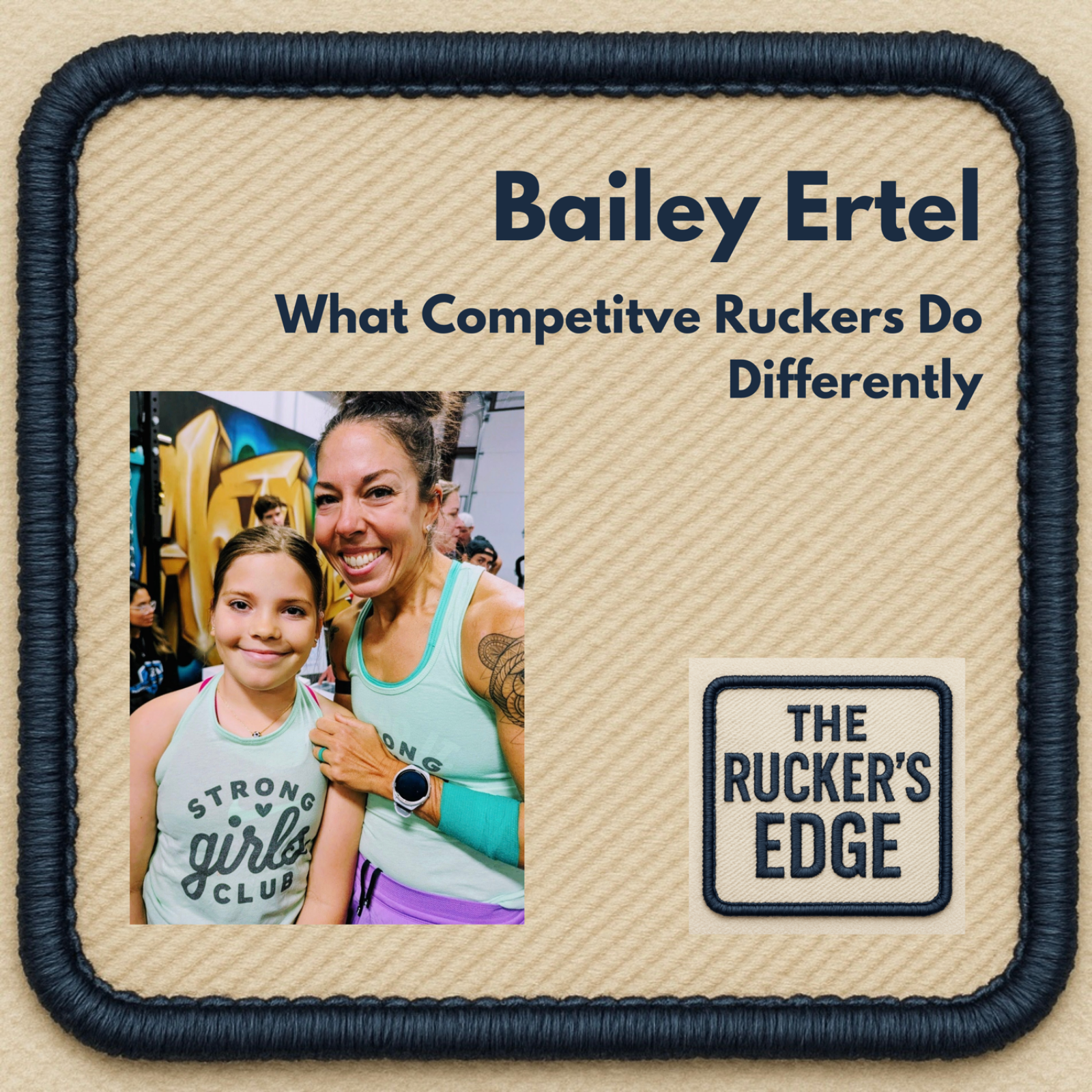


What separates recreational ruckers from competitive athletes?
In this episode, Spencer sits down with Bailey Ertel, one of the top competitors in Ruck Race League and an accomplished DEKA athlete, to unpack the mindset and training habits that helped her rise through the rankings.
Bailey shares how she went from simply trying her first DEKA Ruck event to finishing near the top of the Ruck Race League leaderboard. Along the way, she discusses pacing mistakes, progressive overload, strength training, data analysis, fueling, mobility, and why community has become one of her greatest competitive advantages.
Whether you're thinking about signing up for your first event or simply want to become a stronger, faster, more capable rucker, this conversation is packed with practical lessons you can apply immediately.
What You'll Learn
- The biggest pacing mistake new competitors make
- How spreadsheets and race data improved her performance
- Why strength training is essential for competitive rucking
- How proper fueling transformed her performance
- The surprising role community plays in getting faster
- How Bailey worked up to carrying 180 pounds safely
- Advice for anyone considering their first competition
Guest Introduction
Bailey Ertel is a competitive hybrid athlete and one of the top-ranked competitors in the Ruck Race League. She competes in DEKA, HYROX, and other functional fitness events while balancing family life and raising two daughters. Known for her analytical approach to training, Bailey uses race data, deliberate practice, and progressive overload to continually improve her performance, while inspiring others to challenge what they believe they're capable of.
Links & Resources:
- Follow Bailey Ertel on Instagram: @baileyallyson
- The Rucker's Edge – Official Site
- Follow The Rucker's Edge on Instagram: @theruckersedgepod
Notes:
- Music Credit: "Play This Game" by Black Rhomb.
- Disclaimer: The information presented in this episode is for educational purposes only and should not be considered medical advice. Always consult a qualified healthcare professional before beginning any exercise program or making changes to your health, fitness, or nutrition routine.
0:00 Have you ever wondered what separates someone who simply finishes a Ruck event or a race from someone who consistently climbs the leaderboard? Today, you're going behind the scenes with one of the top athletes in the Ruck Race League. Bailey Erdl shares how she transformed from a first -time competitor who struggled with pacing into one of the league's top performers. We'll talk about the training habits that actually move the needle, why strength training matters more than most Ruckers realize, how analyzing race data changed her approach, and the mindset shifts that helped her discover she was capable for far more than she imagined. You're listening to the Rutgers Edge podcast, a show all about rucking that is designed to help you improve your rucking routine, lose weight, and ultimately gain your strength and energy back. Each episode dives into the science, stories, and strategies behind rucking. You'll learn from top ruckers, coaches, health experts, and performance specialists who break down what it takes to train smarter, recover faster, and stay ready for the next challenge.
0:55 So whether you're new to rucking or an experienced rucker that's already logged hundreds of miles, this is the show for you. I'm your host, Spencer. Thanks for listening in. Please enjoy my conversation with Bailey Erdl. Bailey, thanks so much for being here on the Rutgers Edge podcast. Really excited to talk to you. You have some really cool things happening in your life, particularly an event that you ran or you competed in with your daughter that I want to dive into because I think working out with kids is one of the most fun things and I really want to hear your take on it. But welcome to the show. Thanks for joining us. Awesome. Thanks for having me. So glad to be here. Yeah, absolutely. So this is obviously a rucking podcast, but I understand your fitness started well beyond you first started rucking. So I think in our prequel, you said you started out running. Can you kind of describe your fitness history before putting a rucksack on? Yeah, sure.
1:44 So I... I mean, I'm like a lifelong athlete, so I've always been involved in sport of some capacity. Grew up playing multiple sports. And then, as you mentioned, I found distance running as a young adult right when I was out of college. And I kind of really enjoyed the marathon distance, which is probably weird, but I seem to really. Yeah. It's not for everybody, but yeah, long distance running definitely does something for people that enjoy it. Yeah. Yeah, for sure. And I think I really latched on to like this idea of qualifying for the Boston Marathon someday.
2:26 So like I was really down with the running for a while. I did a little bit of like strength training off and on to support the running. But like I didn't really get into that until after my youngest daughter was born in 2018. And I guess the story there was that I won a raffle to have a free boot camp entry for a month. And so I was six months pregnant at the time when I won that raffle. And I didn't really feel like I should probably sign up then. I did sign myself up for basically eight weeks after my due date. and somehow managed to get out of bed and show up, and I absolutely loved it. And that kind of got me into, you know, going down more of a strength path. And then from there, like, I got into competing. My trainer at that boot camp really encouraged me to get into competing, and I loved that. I started with CG games, added DECA and Hyrox to the mix. Moved into a gym environment where I got like squat racks and barbells and all of that good stuff. And so then I really started focusing on more heavy lifting. And eventually through DECA, I became intrigued about rucking because I saw it happening there. And I was like.
3:51 That looks really intense. I want to see what it's like to, you know, do a decafit with a ruck. And so I went out and got a ruck, and that led me to Ruck Race League this year for the first time, which has been absolutely wild. It's been such a cool journey. Yeah, I want to talk about Ruck Race League because you're crushing it right now. I took a look at the leaderboard. I think you're in fourth, if I remember correctly, through the first four events. Is that right? So I finished fourth in this most recent event last month in June. And then I think I'm actually second overall for like across the events right now, which is wild. I don't even understand. That's amazing.
4:33 Okay. I had it backwards. It's fourth for the most recent event. That's crazy. But so what about those Decker Ruck events kind of drew you in, do you think? Was it just something new or was it just like a challenge? Like what was it that? made you decide to jump into that pool? You know, I think it was a mix of things. I think A, as you mentioned the challenge, obviously like Decafits are challenging on their own, but like I was kind of intrigued. to up the game and make it even more challenging. And so that was part of it. I think the other thing I recognize is that there's just like this super cool community surrounding those rec events. And so like everyone's very supportive and, you know, trading tips and it's just, it's... the community has been growing actually really quickly over the last year or two. And so like, I think the community also, some of the people who were doing it, I was really attracted to like what they were all about. So you're like the fifth or sixth person I've talked to about Decker Ruck events. Y 'all are all saying the same thing. The community is amazing and supportive and positive. That's really, really cool. I mean, sure, you're competing, but you're also, you know, you want to help your friend out. I think that's really amazing. Okay, so yeah, you started these competitions. Let's go
6:05 back to when you first put the rucksack on for the first time. Yeah. Had you worn weighted vests during previous workouts or did you just was this like when you were training for these deck of ruck events? Was this like the first time that you put a rucksack on? So I had back when I was doing CG games, I had in order to like improve my performance there. I was training with a weighted vest, but it was like, I don't know, I don't even think it was 10 pounds. And so I think when I got my first ruck, I just. Like it came with a 20 pound weight plate. And so I just threw that in there and went. And I think I like took the dog for a walk and then I went to like clean up his poop and about like hit my face on the curb because he saw a squirrel.
6:54 And I just toppled over. Oh, gosh. Yeah. But like, yeah, it was it was kind of a transition. Right. Like it was very different from like the lighter weighted vest days. Yeah. Oh, yeah, for sure. There's definitely those moments where you catch yourself off balance. You're like, oh, wait, yeah, I'm wearing like extra weight. I can't pivot like that anymore. It's kind of funny to hear that you just happen to have it with a dog on a leash pulling you in opposite direction. So when you put the rucksack on, obviously you were training, but did you have specific goals in mind when you started working out with the rucksack and obviously through the Decker Ruck events? I like I honestly was like so stupid about it. Like I just kind of put it on and I did continue despite that, you know, sort of horrifying first experience. I did continue walking the dog with with the rucksack on. And I think at some point I added a little extra weight because I started to notice, OK, it's getting a little bit easier. Like, you know, I think I'm getting used to the weight. But I did not have any type of, like, solid training plan. Like, I really should have done more research. I think I thought I could just show up. And actually, the first DECA ruck event I did was a DECA mile. And it, like, absolutely destroyed me. I have never been so humbled by a race. I literally was like, I might not finish this thing, you know, because
8:26 I just went out way too hot and I didn't understand how to pace myself. And so I really had to practice that after that first kind of, you know, traumatic experience to make sure when I came back and did the next one, my pacing was on point and I was able to survive the whole thing. Cool. That's cool. Yeah. I mean, I also struggle with pacing. I mean, even even like before I had a rucksack on, I've struggled. And it's kind of funny you mention that because I had Sam Schakowsky on the podcast and she's like a coach, a running coach, a rucking coach, a strength and conditioning coach. And she is a pacer for these like ultra marathon events. Yeah. And so I am really interested to talk to her and see what kind of. tips she has to stay on pace, but what helps you figure that out? Like what, what, uh, I mean, I have a feeling maybe some of your spreadsheets did, which I definitely want to talk about in a minute, but like, how did you figure out what, how to adjust your body to a certain pace to complete these events and actually like feel good about the work that you put in? I mean, I'm still learning every day. Like I've only been at this for a little over a year now. And so, um, I think Ruck Race League has helped a lot because basically I've had to go out and do trial runs of these challenges. And a lot of times I do. I blow up and I fail and I don't finish the challenge the first time or even maybe two times that I attempt
9:56 it. So I think it's really just, for me, a lot of trial and error. I don't know, trying to learn, like listen to my body's cues and pay really close attention to how I'm feeling as I progress with an event. Wow. I mean, I think that says a lot about the determination that you have. You said that you've potentially almost failed like a couple of times. And you're like, no, we need to go back. We need to fix this. That says a lot. And listening to your body at the same time, it's like some people are just like. Push their body, like get it done. And it's like, yeah, I can't walk for the next couple of weeks. But so let's talk about sort of like the training that you're doing now with the ruck sack. You're crushing in the ruck race league. What are you doing in between events? I mean, it's like you don't really know what the next event is going to be. So like, what are you doing? Like, is it all ruck sack work? Is it running in and strength conditioning? I'm just so curious. It's been.
10:58 I'm trying to, I haven't been doing enough rucking to be honest. The last event we did, which I use my spreadsheets for, I know we'll talk about that, but I went for like a really heavy attempt at that event. So I was carrying like 160 pounds and I hadn't been practicing that. And it like, I did it, but it ate me alive and I fell short of what I expected for myself. I think that's what I'm still learning is like you do have to put in the training specifically for this. And for me, I struggle with because I want to do so many different things like. it's really hard to find that balance and make sure that I'm getting enough of all of the things in. So right now it's a combination of running. I'm trying to get my running mileage back up. I'm always strength training. I strength train like four to five days a week. I'm trying to throw in, I'm trying to like basically make some of my runs replace them with rucking. So that's sort of supplementing there. Um, and then I also, because like recovery is important, right? I'm also trying to fit in mobility and like yoga when I can to just make sure that I'm staying flexible and healthy. Very cool. Yeah. I need to, I need to do that a lot more. I need to stretch between all my off days.
12:28 Yeah. It's like, as I age, you know, definitely not as limber as I used to be. I really need to stretch in between. Cause if not, like I've noticed the next. next run or the next truck I go on, there's like something that's a little off. I'm like, I probably, if I would have stretched, maybe this wouldn't have happened. But anyway, so you're saying you're lifting, I think you said four to five. You're working, you're essentially getting a workout every day. You also have a full -time job and you also have two kids. So you're working out in the morning, at night. How are you finding the time to do all this? That's what I'm trying to get at. Yeah. Well, I mean, I am really blessed in that my work schedule is pretty flexible. I mean, we have scheduled meetings that I have to be at, right? But like, you know, ultimately my supervisors, like, you know, they know I'm going to get my work done.
13:23 And so they're cool if I'm like taking an extended lunch break to go do a workout or things like, or, you know, cutting out a little bit early to get a run in. And so like that, I fully appreciate that not everyone has that, but that is one advantage I have. And then the other thing is I signed my older daughter up for a soccer team that practices like a three minute drive from my gym. And so I've kind of made my rule when she trains, I train. Cool. So a lot of times it's like that morning, early morning workout. And then if she has soccer practice or, you know, I have time over my lunch break, I'll sort of squeeze a second workout in there. And that's yeah, that's key, especially like, yeah, having having kids wanting them to do what they want to do and also kind of fulfilling your. It's to do something that you want to do. Yeah. Knock it out at the same time. That's such a great idea. I think a previous guest on the show, Andrew Brandt, mentioned something very similar. Like if he's he wants to take his kid to the playground, he's throwing on his rucksack and they're walking. So he's going to get his work out and she's going to expend some energy on the playground. So we win for everybody. Really good tip there. All right. Spreadsheets. You do you live in Excel at work? Is that what is that like what you do? Not really. Yeah, I don't I wouldn't say I live in Excel, but like the spreadsheets are kind of just an extension of how my brain works, like because I'm a product
14:55 manager. So like as a product manager, I'm always asking, you know, what problem are we trying to solve and what data can I use to kind of make a better decision about that? And so I kind of I mean. Unfortunately or fortunately, that creeps its way into my life and into my training. It's just kind of like how I think now. Right. Sure. And so like how it all got started was after my first DECA fit competition, I'd finished third in my age group. And instead of just sort of wondering like, well, gee, how could I have gone faster? How could I have been on the top of the podium? I realized that they have like really comprehensive. metrics available about your performance so like splits and how they compare to others okay And so I kind of pulled those into a spreadsheet.
15:47 I pulled my splits out and then I pulled the girls who finished above me and a few elite athletes. And I just kind of started looking for patterns, you know, like, OK, so where am I already kind of banking time and doing well? Where am I slowing down and what do I need to specifically be training to? And just kind of. Trying to come up with that sort of race strategy and training strategy to support my next event. That's really cool. I didn't realize that they gave like data or metrics. Yeah. Are those available? Like, I guess. After the race online, they post them? Yes, exactly.
16:29 And you can like pull them out. And I hope no one's creeped out that I was pulling their results out as well. But it was a learning opportunity. Public domain, right? Yeah. Maybe that's why they post them. I don't know. Who knows? OK, cool. So like I saw you, you're tracking your competitions. Are you are you pulling in data from like day to day workouts or anything like that as well? No, I don't do that as much. I do use it to kind of like tailor my training. Like right now, the skier is my nemesis. Like that is by far my Achilles heel, my worst zone.
17:10 And so like I'm really training to that and I am paying attention to the splits. But like, yeah, I don't really bring it to that level. It's more about just like the progress as I continue on with, you know, multiple competitions. Yeah, that I totally get that. I mean, because I think you wear a garment, right? Yeah, I thought I saw that. And I was like, because I've. sort of played around with the idea of pulling some data off the watch and like maybe plugging it into AI and being like, hey, develop a plan or something like that. But I just, I don't have the time to do that. I'm just like, if I get a workout in that day, I'm like, that's a success. I'm just not at that stage of life. But I am curious to see what kind of metrics I can pull from these like smartwatches and kind of pull them into a database and see what my weaknesses are. But the data that DECA is providing is...
18:01 perfect like that sounds amazing so you did that after your first event right that's when you started i did yeah yeah how did it how did it plan out after you adjusted your kind of like your workouts for your next one what was actually let's let's step back what deca events have you have you competed in um so i've done i've done strong i've done mile and i have done fit um and then i also Like I had historically just been doing individual events and I just added teams to the mix. Well, because of my daughter. And then I've also found a couple other teammates who I've been like, I mean, it's just it's a different pace. It's a different race. It's like a lot more fun than I expected because you just get to go hard and then like recover. I think the only thing I haven't done yet is Atlas, which I really, really want to get in soon. I think that just looks like a ton of fun and just a whole different beast. Very cool. So did the spreadsheet and adjusting your workout, did that help you transition from the first event to the second event? It did. But like. I don't know.
19:17 I find it so interesting because it's like, you know, I came up with a strategy on where I wanted to push a little bit harder and where I wanted to pull back. And I think I took like three seconds off. Okay. Yeah. So what was just enlightening is like, you know, you. sort of go in a little myopically like, OK, I'm going to improve this here and I'm going to. But then like that throws other things off. Right. So it's like if I go in and I improve my air bike time by 30 seconds, like that seems like a good thing. But then if later on it is, you know, costing me time like that 30 seconds and then some, it's probably not worth it. So like that's what I really like about it is like the strategy is not static.
20:05 Right. Like, yeah. As you go, you learn more and more about your body and your strengths and your weaknesses and you try things out and maybe they work, maybe they don't. But it's a lot of fun to then come back and try again and see if you can like find that magic formula. Sure. And you're trying something new and it's like the more things that you try something new, maybe something will actually move the needle significantly enough. Yeah. But so are you going to keep keep tracking the spreadsheets and seeing what's working, seeing what's working for you? Cool. Yeah. I mean, if it's fun. Yeah, absolutely. Go for it. 30 seconds. I'll take 30 seconds. Yeah. More coming up in just a moment, including what it's been like for Bailey to compete with her daughter at multiple DECA races. But first, do you know a fellow Rucker that has talked about signing up for a Ruck event or race? If so, please text this episode to them. Sharing this episode would not only help them, it will also help this show grow, which will then help even more people improve their health and lives. Thanks. Okay, back to it. You just mentioned... The decade events that you do and how you're now doing team events with your daughter. First of all, that's really cool.
21:13 I think working out with kids is great. Competing with your kid. That's like I. Yeah, that's amazing. Congrats to you. So what who had the idea first? Yeah. What were the thought processes behind it? Was it your daughter had the idea? Was it was it you? So curious. Yeah. Well. I will say that both of my girls have come along with me to so many workouts and training sessions just because life is busy and sometimes that's what I have to do to get it in. But I've never minded it because I want them to see that example set of prioritizing strength and really pushing my limits and just choosing hard. They'd been coming along with me to DECA sessions like maybe a year or two ago. And my older daughter started expressing some interest like, oh, you know, like, what's the skier do? Can I try the bike? Questions like that. And so. I was obviously game to like, you know, show her the ropes and introduce her to that. And then after she played around with it a little bit, eventually it was, well, can kids do DECA? And I was like, well, actually, yes, they can. Yeah, that's great. And so she was nine years old at the time and she decided, you know, like, since you had to be 10. Once she turned 10, she wanted to team up with me and
22:45 try a deck of strong together. My gym is an affiliate, so we host events. And so we signed up and it was wild for me because like she was coming to the training sessions that like these training sessions make grown men cry. Right. And like this 10 year old is just showing up to these sessions and doing the work and not complaining. It was crazy. And like when we finally got to race together, like that was probably one of the hardest DECA events of my life because I was just like choked up the whole time. I was like fighting back tears just watching her be so courageous and watching her fight so hard for this goal that was like kind of outrageous for a 10 -year -old to even be considering in the first place. And and like hearing, you know, our gym has a great community, hearing everyone cheering for her, like and so impressed with her. It was it was just such a cool experience.
23:48 And then, of course, like right after we finished, she like absolutely crushed it. And we had like one of the fastest teams times there that day. But she finished it and was like already talking about doing another one because we had to beat our time and we were so close to, you know, and I was just like, wow. That's amazing. Good for her. I mean, yeah, I can't imagine the, yeah, like how proud you must feel competing alongside with her and like, so you alternate time on the equipment, right? So I think there was a photo you posted of, was it, was she doing? on the bike or maybe she was a skier or something, but you're just like in the background, just like gleaming. It just showed how proud you were, like regardless of where y 'all were in the race, if y 'all were like, you know, winning or, you know, not, but you're just like, yeah, this is great. I mean, this is what life's all about.
24:46 Yes, for sure. And clearly you're setting a good example because like it. It sounds like if she's willing to do all this, it's kind of ingrained in her. Yeah, this is what mom does. She tries hard, so I'm always going to try hard. So it sounds like you're definitely instilling some really good habits into your kids. It's amazing. I hope so. Yeah. So you had to travel for that too, right? That was in Denver, right? So we did the Strong first here in Austin. And then we did we signed up for Decafit Austin, which was shortly after that. And then she had so much fun there. I looked at the calendar and was like, oh, Denver is coming up like that would be a nice little trip. And flights were cheap. I was like, why not? So, yeah, the two of us traveled there together and did another Decafit in Denver in May. Yeah. Man, that's awesome. Is there a specific moment from any of the races that you'll like never forget or is just like stands out the most, perhaps? Yeah, I think. Well, actually, I think for me, I went into these. Like with the expectation that I was probably going to have to, you know, because it was like her first time, like she's still learning. She's only 10 years old. I went into it, you know, expecting I might have to take over for some her in some places, you know, if she was struggling. And like what was mind boggling to me was that it
26:18 was actually the opposite. Like there were multiple times that. And I had to be like, Lula, can you, you know, like, can you run this lap? Like, I'm struggling. I need to recover a little. And every time there were like probably three times in Decafit Austin where she answered the call and she was like, yeah, mom, I got it. And she like did amazing. And so like that was the thing to me. I was like, I shouldn't have underestimated her. Like she is a beast, you know? Oh, my gosh. That's that's phenomenal. Lula is her name. Lula. Yeah. Wow. Way to go, Lula. That's carrying the weight. That's amazing. Is there like a race that like you learned something like kind of profound that maybe changed how you operated or trained? That's a great question. I mean, I think all of them I learned so much. Right.
27:13 But I think probably for me. Ruck Race League, we did an event where it was a 5K and like the heaviest load that you could carry. And like I went into it being like, oh, I don't know, maybe like what, maybe like 80 pounds. Like, I don't know. What should I try? And I went back and I was like looking at some of the scores from last year. And, like, my mind was just blown because I was like, how are people carrying these weights? Like, this is crazy. And so I realized I was going to have to up my game. And, like, I think the biggest thing for me, I knew I couldn't jump right up to, like, 180 pounds, right? Like, that was not going to be a smart way to approach it. And so I had to really, like, baby step my way there. And it just like it was such a cool experience because it completely changed my perception of what I was capable of. Like in my head, I was like, there's no way I'm going to be able to get through this carrying 180 pounds. But it was like, sure enough, like I worked my way up to that and I, you know, I managed to do it somehow. And so like I think. Throughout Ruck Race League, like that's been sort of what's
28:44 stood out to me so much is that every event I go in with these like preconceived notions of like what is possible. And every single time you start to see the leaderboard score show up and you're just like, oh, well, that's not going to cut it. And so you have to go and up your game as a result. And it's just the coolest thing. So I think. you know, having that community aspect and having that environment of people who are competitive and, you know, elite athletes, but they're also very helpful. Like you're going to get way further in that type of situation than you are if you just approach training and competing on your own. So I think that's been one of the biggest ahas for me because I didn't expect that when I signed up. Yeah. That's, that's wild. Um, yeah. Seeing people post their, their results and, you know, it's like maybe like the first couple of people post, you're like, Whoa, that's like, wow, they did that. And then like more and more people are posting and like that.
29:53 Former leader just keeps getting bumped down. You're like, oh, my God, these athletes are absolutely crushing it. So the fact that you're like at two right now is phenomenal. So going back to that event where you got up to 180 pounds, where did you start and how did you work your way up to 180? Yeah. Well, I mean, I think the interesting thing I also learned through that event is like. it can be very difficult to try and fit 180 pounds. Like the packing was like the hardest part, right? Yeah, you need like lead. Yes, exactly. And so I started, I think, because I'd only been carrying up to like maybe 50 pounds at that point. And so then I bumped it up to like maybe 75 to start.
30:41 And then I just and I was only going I basically I would do a short distance with like a heavier weight and then a longer distance with a not so heavy weight. I was really trying to just like up my capacity to like hold. A lot of weight for longer and longer. And I kind of just kept progressing both of those until I got to the point that I felt like I could make an attempt. And I think my first attempt was it was like 140 pounds, maybe. And then, as you mentioned, those leaderboard scores kept. popping up and getting higher and higher. And I was just like, I got to try this again. And so it was a bit of a leap because I didn't have a lot of time left. You have through the end of the month to post your scores. It was a bit of a leap to jump from like the 140 to 180 almost immediately.
31:38 But I did it and I survived it and I didn't get injured. which is great. Good for you. Congrats. That's amazing. So that was, so you went from 50 to 180 in like 28 days, essentially. Basically, yeah. That's wild. That's crazy. That's great. ChatGBT told me not to do it, but I did it anyway. Screw you, AI. Watch this. I'm more capable than I think, and definitely you think. So that's awesome. Wow, there you go. Thanks. Dang, yeah, 180. So how did you fit it all in the, like, what were you using for your weight? How did you fit it all in there? Well, what I ended up doing, because I have like a, I have the Rucker, God, I forget what it is. I think it's like a 20 liter. Okay. So I had to buy like add -on pouches that had like MOLLE attachments. So I had like, I think three or four pouches because those were allowed for the rolls. And I managed to like stuff. you know, a series of sand bells and weight plates and dumbbells and basically whatever I had in the garage. And to that, it was probably like not the most comfortable thing I've ever done. And there were probably better ways to have packed it. But that's definitely something I'm going to have to do some research on if I'm going to do this next year. Good deal.
33:02 Yeah. Yeah, for sure. Bailey, this has been a fantastic conversation. I really enjoyed my time speaking with you and learning how you're achieving these amazing feats. I just have a few more questions for you, if you don't mind. These are more like takeaways for the listener if they want to start maybe transitioning to competition or up in their game and their workouts. If someone listening right now wants to move in from like being a recreational rocker, like solo by themselves into being a competitive athlete, like going, joining Rock Race League or these decade events, what's sort of like the first concrete step that they should take like this week outside of like signing up for like, what should they be doing like in terms of like prepping their bodies for competition and whatnot? Yeah, well, I mean, I definitely think, you know, like strength training has been such a key for me. So like if you're not strength training already, definitely do that. Definitely get out there and rock. You know, that's how you get better at something is by actually doing it. Yeah. And I think the other thing, you know, we live in this age where there is so much information available online.
34:14 And so like for me, when I was. approaching DECA, like my first DECA fit, I went and I went on YouTube and I found, you know, videos of past races. And I sort of watched those to just, I don't know, like, I always feel like I have to understand what. it's about going into it. I can't just like show up to something and like, yeah. So for me, it was like just watching videos. There are also a lot of great resources available on like how to actually execute the zones in a way that like won't kill you. Right. So I recommend checking out some of that as well, just because I do think the more like prepared mentally you are going into these, the better the outcome.
35:02 So I think those are probably my main tips and also mobility. Like we all need more mobility. So make sure that you're doing some of that to be able to like keep yourself flexible and able to move for the long run. Thanks for sharing that, Bailey. Appreciate that. You probably mentioned what I'm about to ask you, but like what's like the training habit that made the biggest difference for you that like moved the needle more than anything else that you were doing? If there is even one, I don't know. I think there are a few things. So we talked about the spreadsheets. So I think just being addicted to learning is something that has moved the needle a lot. I think the other thing is fueling. So I think that's been one of the biggest difference makers for me personally. And full disclosure, so I suffered from an eating disorder in my younger years when I was a teenager. And so, like, I think I just had a lot of these thoughts. Like buried deep inside, right? Like thought patterns that somehow eating less equals performing better, which like obviously is not the case. So like I've had to do some unlearning to sort of train myself that, you know, my body is not something to fight against. It's actually this vehicle that's allowing me to do all of these incredible things. And, you know, just like a car, it needs
36:32 proper fuel. And so looking at food as fuel and sort of experimenting and just seeing what I can do to improve my performances through fueling has been really key for me. I think that's been just one of the biggest difference makers. Excellent. Thanks for sharing that. And congrats to you for overcoming that eating disorder and turning into this amazing athlete that you are now and inspiring the next generation who's arguably. outperforming you, carrying the weight of these decade events. I don't know how to say that, but I'm just like, way to go, Lula. That's phenomenal.
37:14 And congrats to you, Bailey. You're doing something right over there in terms of your own physical fitness and raising your kids right. So thanks for spending your time with me today. Thanks for sharing your knowledge. I'm hopeful that the information that you provided to the listener today will help them either jumpstart or reevaluate how they're currently. working out and improving their fitness. So appreciate you coming on and sharing your knowledge. Yeah, of course. It's been so fun. All right, that was my conversation with Bailey Ertle. Check out her Instagram to see what she's been up to at Bailey Allison. I'll put a link in the show notes. If you found this episode entertaining or helpful, subscribe to the show so you're notified of new episodes.
37:55 In the next episode, Sam Svetkovsky comes back on the show. Always great talking to her. We talk about pacing. She explains how to find your pace, when to scale back, and a whole bunch more. So you're not going to want to miss that one. Okay, that's it for today. Thanks again for listening to this episode of The Record's Edge.