Why Runners Should Ruck
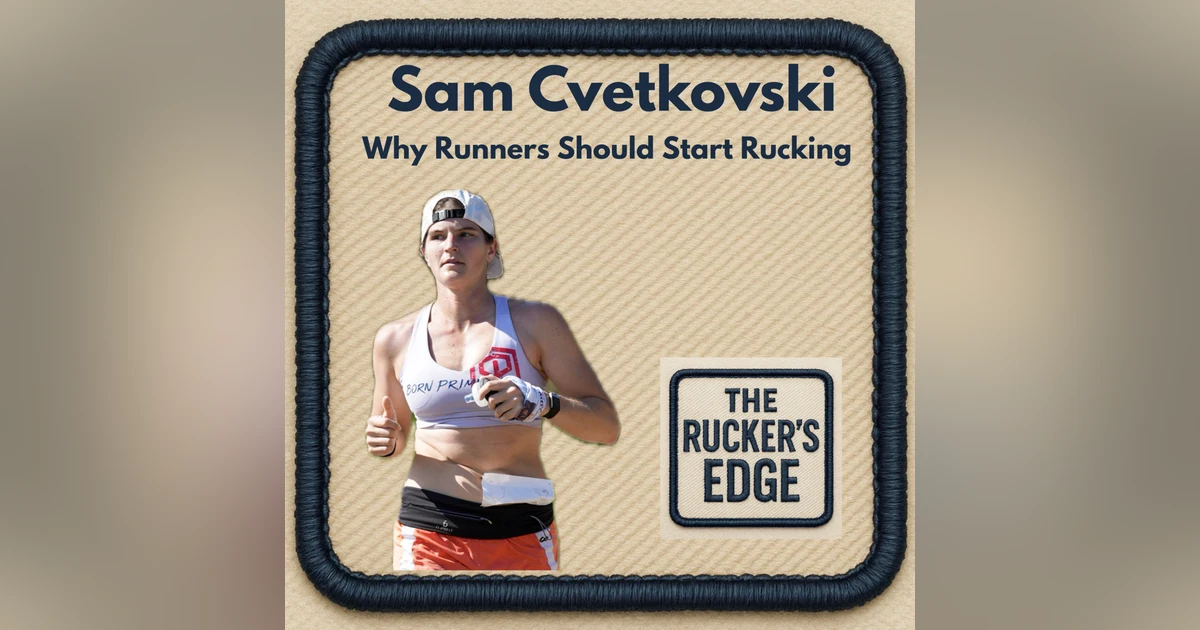


Many runners believe the key to getting better is simple:
Run more miles.
But today’s guest explains why that belief can actually hold runners back.
Sam Cvetkovski is an endurance athlete, ultra runner, rucker, and coach who helps athletes build durability and long-term performance.
Her journey started in 2020 when she discovered rucking through GORUCK events. That eventually led to competing in some of the toughest endurance events hosted by Green Beret Fitness, including multi-day mountain races.
She later transitioned into ultra running, completing races from 50K to 100 miles, and now coaches athletes through Omni Athlete Training.
In this episode we discuss:
- The four pillars of running performance
- Why strength training is essential for runners
- How rucking builds durability and endurance
- The biggest mistakes runners make when starting rucking
- How runners can incorporate rucking into their training
Clint Carr, a former guest of the how and a fellow endurance athlete, described encountering Sam on a ruck like this:
“The mountains didn’t care about my résumé or excuses. Steep switchbacks bit into my calves. My lungs felt like they were pulling glass. Somewhere along that climb, I met Sam — quick exchanges, shared glances, me feeding her tag times before she surged ahead like she had wings. She didn’t just pass me; she left me in her dust.”
If you’re a runner, rucker, or endurance athlete looking to train smarter and stay injury-free, this episode is packed with insights.
Links & Resources:
Sam on Instagram: @samstrap
Sam's Coaching Services through Omni Athlete Training: Omni Athlete Training Website
Sam's Blog & Coaching Info: Ruck with Sam
The book Sam mentioned in the show: Training For the Uphill Athlete
The Rucker's Edge – Official Site
Follow The Rucker’s Edge on Instagram: @theruckersedgepod
Notes:
- Music Credit: “Play This Game” by Black Rhomb.
- I'm not a doctor, and this podcast is for informational and entertainment purposes only. Please consult with your physician before starting any new exercise or physical activity.
0:00 We talk a lot about how to improve our rucking here on the Rucker's Edge podcast, but this episode is focused on how rucking can give runners an edge on their competition and training. When runners try to get better at running, they often think that they need to move their body faster and farther. That's true to an extent, but what if I told you that one of the best ways to become a stronger runner was actually slowing down and putting weight on your back? Today's guest is Sam Svetkovsky. an endurance athlete who started rucking in 2020 and eventually went on to compete in ultramarathons and 100 -mile races. She's competed in demanding Green Beret fitness endurance events, tackled mountain races across the country, and now coaches athletes looking to push their limits in both running and rucking. In this episode, we break down the four pillars of running performance, aerobic capacity, strength, running economy, and recovery. We also talk about how rucking can help improve every single one of them. If you're a runner who wants to get stronger, more durable, and mentally tougher, this episode might change how you train. You're listening to the Rucker's Edge podcast, a show all about rucking that is designed to help you improve your rucking routine, lose weight, and ultimately gain your strength and energy back. Each episode dives into the science, stories, and strategies behind rucking. You'll learn from top ruckers, coaches, health experts, and performance specialists who break down what it takes to train smarter, recover faster, and stay ready for the next challenge.
1:27 So whether you're new to rucking or an experienced rucker that's already logged hundreds of miles, this is the show for you. I'm your host, Spencer. Thanks for listening in. Before jumping into today's conversation, I wanted to take a quick second and ask for a favor. If this show has helped you in any way, it would be amazing if you could drop me a quick review on whatever app you're using to listen to this podcast right now. It helps me bring new episodes every week. And more importantly, more people looking to improve their fitness will be able to discover the podcast so you can help someone else start or improve their rucking. Thanks so much. Sam, first of all, welcome to the Rutgers Edge podcast. It's great to have you here. Awesome. Super excited to be here. I wanted to start out by asking, you've done a lot of rucking events. I think you do a lot of Green Beret fitness events. You've done a lot of running races, ultra marathons.
2:14 What started first? Were you into running first or was it rucking? I guess explain that journey for you. Yeah, no, it's definitely a journey. That's for sure. I'll start with like. First things first, I actually hated running for most of my life. And I always make that joke because everyone's like, I just don't like running. I hate running. And I'm like, I get it. Trust me. And so this, my like rucking and then eventually running journey started. over COVID, which I think happens a lot for a lot of people, right? 2020, I couldn't find any gym equipment. Nothing was open. I live in LA, so everything was locked down. And my buddy was like, hey, check out this GoRuck thing. And he sent me the backpack and the sandbags, like the link to them. And I was like, oh, cool. This is a really easy way to get workouts in at home. And so I bought the pack. I bought a sandbag. I got a plate and started just, you know, moving around the neighborhood and doing some workouts until eventually my barbell showed up, which I was really excited about.
3:19 But so I started that and then got into like, you know, the interwebs of finding these go rock challenges. And so my first like true rocking event was actually a go rock tough down in San Diego. And so that's what I would say started like the rucking adventures. I met some really cool people down at Triton Ruck Club. They kept, I say bullying me, but they really just kept encouraging me to keep showing up and just come out to some events. And eventually I made some really good friends and we decided to sign up for the Go Ruck Recon H2B. And so that was like my first probably like. rucking endurance experience i would say because that is a full what 48 hours over the weekend um and so that was that was super cool uh it was honestly that's probably one of go rock's best events i would argue it's a really meaningful one and and you get to meet some really great people Awesome. But yeah, go ahead. No, no, that's really cool. So I'm familiar with Triton only because I know them via social media, but they seem to be very passionate about fitness and rucking. Oh, yeah. Cool to hear that you're involved with them. I've never met someone actually involved with Trident Rock. Oh, yeah, yeah. No, they're great. Yeah, they've got a San Diego and I think now a Northern California chapter too. But at that, what was it? At the Recon Challenge, I actually, or Recon HTB, I
4:52 met... Greg, who's the owner of Green Bray Fitness. And he was like, Hey, if you like Rocky and you should come check out these mountain events I do. I was like, Oh, that sounds awesome. That also sounds really hard. Let's go do that. And eventually I found myself on the Florida trail for their Ocala event, which is 68 miles through the Florida Ocala National Forest. And it wasn't on purpose that I did that one first. It was that I had missed one or two of them. And then a buddy of mine it's always friends right that say hey you should sign up for this you could probably do it like you've done two of these htbs like sure same same um and it wasn't the same that's for sure because because rucking for 68 miles straight is very different than getting thrashed by cleve in the ocean plus some rucking on top of it so um that's how i started i'd say transition more into like the endurance side of rucking. And, you know, over 2024, I spent a lot of time doing the Green Beret fitness races. And it was a lot of fun because those take you to really cool places. One of my favorites is Yosemite. Did a really cool one in Provo, Utah, where we ran into tons of snow, which was my first time like really experiencing snow on a mountain. Oh, yeah. First time just on a mountain.
6:20 I thought you were going to say first time rocking. I mean, like I grew up in Buffalo, New York. I'm familiar with snow. I've snowboarded. But this was the first time it was like, hey, you're going to go navigate through the snow covered mountain. And I was like, oh, cool. Super unprepared. But we made it. Wow. Yeah. But yeah. So then my big goal in 2024 was the GBF Operation Century, which was a 20 mile loop. And the goal was to hit 100 miles. I ended up doing a little over 80. And something around 18 ,000 feet of elevation gain through that time. Um, it was in Idaho, Wyoming, like middle of nowhere. I think we saw more cows than people and it wasn't cows. It was a, yeah, but, but there was so few people out there, but it was an incredible experience.
7:12 And then the coach I work with, he, you know, it was like, Hey, why don't we, why don't you go for some trial runs? And we did a bit of that as well when I was training for this instead of just rocking, but I. realize that slowing down with the rucking because you're not running necessarily like you're moving quickly and sometimes there's some pace to it but taking the ruck away was really nice for me because I could cover so much more ground but still not go to that place of what I used to think of running, which was a punishment for sport, or it was just to go hard or to lose weight or do these things. It was actually like an enjoyable experience to be able to go out to the mountains and spend some time out there or a lot of time out there running, running around. So rucking came first, then running. Yeah. Rucking came first. That is very interesting. Yeah. So you kind of found like your love for endurance through rucking and then it transitioned to running and you've done some ultra marathons, I think, right? Yeah.
8:16 Yep. Last year, I think I really would say 2025 was when I started on this like ultra running experience. So right after that century in 2024, I went out and did an ultra marathon. It was called the Barkley Fall Classic. If you're familiar with the Barkley marathons, it's like the. entry version of that where they allow a lot of people to check out very small pieces of that course and run it but it's similar in the sense that there's no gps and it was just so much like i just had so much fun out there and so in 2025 i you know i did my first 50k first 100k hit my first 100 miler as well and i always tell people that if i didn't have that rucking background I don't think it would have come as quickly as it did because with a ruck on, you know what it feels like to work under heavy legs. And that's what an ultramarathon at the end of the day is, right? There's a huge mental component to it.
9:18 But physically, you're climbing up these mountains, you're climbing up these hills. If you've done that with a ruck on your back, you already know what your legs feel like at mile 50, 60, 70 before you even get there. Yeah. I mean, I attribute it to like it's the same concept. I played baseball a lot growing up. When you're in, you know, when you're on deck, you're warming up to step up to the plate. You have a donut on your back. You're swinging it because it's making the bat heavier. And you take the donut off. You're like, whoa, I need to slow down my swing. It's almost too fast. It's sort of like the same concept. Like you take the rock off and you can, you know, you haul. I mean, if you wanted to go fast, that would be. something, but certainly endurance wise, you take the ruck off, you feel like you can go a lot further at the same pace. And I think you're, you're currently coaching. Do you coach runners? Uh, I work with runners. I work with ruckers and really any general athlete or anyone that's trying to achieve really any goal.
10:21 That's I'm your person, but specifically I have worked with, um, a lot, like quite a few ruckers, um, getting ready for different GoRuck events, a few that I'm working with that are specifically training for Greenbrae Fitness, some of their longer events, and then runners as well. So with runners, I'm a former runner, and I mentioned this on a previous episode, I've been able to start running again, which has been amazing. I sort of have this thought, and I know I'm not the only one that has had this, but to get better as a runner, it's almost like, oh, I just need to run. More miles. Do you think a lot of runners have that same belief that to get better, you just need to, you need to run further? Yeah.
11:05 And I, you know, at the end of the day, you are going to have to run more to run more. Right. But there, I think there's a cap to that too, but more and more right now we're seeing this and it's a really good trend to be seen and picking back up again, is that strength training and just other components are so important to running as well. Because you can just keep running, but things like strength training make us more durable over that time. Yeah. And on a previous call, we did talk about, we were kind of chatting about like maybe four pillars that would make, improve a runner's performance. But you mentioned strength training and I'm also thinking maybe cross training, but what types of training should runners be incorporating besides? You know, just running into their plans. I mean, we'll get into the pillars here shortly, but I'm just curious, like, should they be, you know, deadlifting or should they be doing squats? What sort of strength training should they be doing? There are different phases of where you will be lifting heavier and doing exactly what you said. You will be dead lifting.
12:32 You will be doing heavy squats. You can be doing heavy lunges, especially a lot of unilateral focus work, because we want to make sure that we're even on both sides. That said, you also do need a strong upper body for running too, because if you only focus on the legs, they're going to be... uneven but when we get into the ultra space you're typically carrying a small pack with water or you have a belt on that also carries your nutrition and everything else and then we also see like well there will be fatigue right so if like you're moving your arms are a part of the run right sometimes we forget that we use our arms when we run so the full body does need to be strong the whole time through and that said you also need a strong core as well. And so there's, there's so much to it that yes, you'll be doing different types of strength training across the board. And again, depending like where you're at and what you're trying to do, if you're using poles for your race or not, um, that's important as well, because. That is just another component that, yeah, it helps maybe take something a little bit away from the legs, but now you're using your arms more again. So you have to learn how to be efficient with that as well. I feel so targeted right now, Sam, because you just mentioned that even your arms need to be sort of developed. You're absolutely right.
13:48 Like I just was fortunate enough to be able to run three miles without any significant ankle or foot pain. And yeah, I'm really happy about that because the whole time I was like kind of babying it. The weird thing is, is after the run, like my legs weren't sore, hips weren't sore, knees weren't sore. My arms were sore. I was like, what? I need to work out my biceps more. And I was like, why is this? This is weird. I think this is a sign I actually need to like get back in the gym and start working my arms. So embarrassing, but happy to say I don't have any like foot or ankle issues. So I'm going to keep exploring that. But all right, let's start. Let's start talking about the four pillars of running performance that we talked about in the pre -call. So to improve our running performance we were thinking that there are four different things that runners should probably focus on the first one being aerobic capacity the second one strength that we just covered a little bit just now the third running economy and the last the fourth one recovery and injury prevention kind of want to talk a little bit about each one so let's start with aerobic capacity what exactly does that mean in practical terms for a runner yeah it's funny it's like You could go into what it fully means, but it's really aerobic capacity or building your aerobic base is about. being able to sustain over a long period of time. Um, and so when you first start something and I always compare running actually to weightlifting, because I think it's makes a little bit more sense for people, right? When you start lifting
15:19 a weight, you might start with five pounds and then eventually go to 10 pounds and then 12 and 15 and so on. And you can do more reps of those same weights over time. When people think of running, they're always just like, I think I should just be able to run no matter what. Right. So when we talk about that aerobic capacity, it's like we have to build that aerobic base. We can't just expect that we can go run three miles or for 30 minutes. And so what we what I like to focus on is that we're going to start from wherever you are and then go from there. So like if you can run for five minutes, great, let's do that. And then 10 and then 20 and then 30 and so on. And so there's a very like. slow build to it where i think sometimes the expectation is that it's just going to be just go run forever and so over time that will start to build up and in the similar way we like to really focus a lot on the different heart rate training zones and i know like zone two is really hot right now it's also a big trend but that is a really important component because it's really more about being consistent rather than intense, right?
16:35 Like easy run should feel easy. And if you're questioning, if it's easy, it's probably too hard. And so when we talk about that, it's like, okay, I went for an easy run, but I went at a 12 minute pace. And I'm not trying to say something's fast or slow, but let's say you go for an easy run. It's a 12 minute pace over time. What we would see is that easy run would probably be faster over three or six months down the road. Yeah, that makes a lot of sense. And I'm curious, what zone should runners be in? I mean, should they reach all the way up to like zone five or should they stay around like zone four? It depends on the session and training session that you're doing. You know, working intervals, you're going to start to hit into that three, four. If you are doing. sprint intervals you're definitely going to hit higher into that zone five at times or maybe uphill type intervals we start to see that three and four but one of the like main principles i use or that i'll reference a lot is from the uphill athlete that's a really great read for anyone that's getting into any type of running endurance rocking for long periods of time and it talks a lot about like the 80, 20 split of your aerobic versus like anaerobic.
18:01 So the aerobic being like that longer steady state, most of your work should be done in that long steady state. And when we think of like an ultra marathon, let's say, I believe when I just ran a hundred K, which is, it took about 15 hours in the mountains. And I was predominantly in like a zone one. to, I probably peaked up to three, a few different times on bigger climbs, but the race strategy was if you feel like you are gasping for air or out of breath, or your heart rate is just feeling too hard. Like if it feels too hard, you're going to slow down.
18:41 And because, because you can't, you can't. red line for 15 hours. Right. So, so you, I mean, you can't red line for more than what, 10 seconds, um, maybe, but, but I think the idea is that, you know, it's going to really be race dependent because if you're running a 400 meter race, I mean, you're going to gas. Yeah. Um, and there's still strategy to that, but. Uh, I always joke like with people and they say, why won't you run like a road marathon or why haven't you run a road marathon? And I'm always like, because it's too hard because you're there. Your heart rate is going to be so much higher because it's such a much shorter race than I'm used to. And I'm like, I just have to run too fast then. Um, but jokes aside. Yeah. I think there's, it depends really how long you're going for, but at a certain point, like it's about the sustainability over time. Understood. Okay. Now moving on to the second pillar of strength. We already hit on this topic earlier. We kind of talked about why it's important, but go over again, which muscle groups are most critical for runners to strengthen if they want to improve performance and maybe more importantly, reduce injury risk. It's hard to say. I mean, like lower body obviously is a huge key for running and just having that muscle over time. And then when we think upper body really definitely in the back is good. And then Everything else kind of helps fill out posture, though, too, because if you're imbalanced, you
20:12 might start to lean forward or do other things in the upper half. And then obviously, I think this goes for anybody or anything is just that core and trunk stability. When we think like major muscle groups in the legs, like you're looking hamstrings, glutes, quads, but just as important, like you said, ankle and feet, which I think are often neglected. You can. Do a lot of like small movement exercises that will help strengthen them just to help support the rest of the body. Awesome. OK, now moving on to the third pillar, running economy. Can you briefly describe what that is? Because I'm sure people hearing it running, you know what that is. Economy kind of know what that is. But those two words together, what does that mean? I like to think of it as how efficient you are when you're running.
21:05 Right. It's, it's using that less energy to do the same thing. Right. So it's just being more efficient overall. And there's different ways to do that. And a piece of it obviously is that aerobic base as that builds, you become more efficient, but also when you actually look at like the technical side of it and running gate and things like cadence and other pieces. Putting that all together will make you more efficient as a runner. Okay. And then lastly, recovery and injury prevention. So I know, you know, runners deal with a lot of repetitive stress, especially on the knees. Why is recovery and injury prevention such a big part of improving performance? Yeah, I think it's like saying, why do we brush our teeth every day? Yeah. Right. We do it because it's preventative. Right. And so there are so many. things that we can be doing and then identifying, especially depending on like your running gait or posture, just different things and imbalances that we have. If we can identify some of those imbalances and start to correct them, it helps fix everything else. And then if you, let's say you're perfect, whatever, probably not true, but we can do all these like prehab or corrective type exercises on a daily basis that take 10, 15 minutes out of your day to help you in the long term and keep you more durable over time.
22:37 Prehab, I'm totally stealing that. Before we move on, what are some signs that a runner maybe isn't recovering from their longer runs or their training in general? I think consistently feeling tired during training sessions, I would say not sleeping well it's it's funny it's that one of those things where it's like if you don't sleep well you're probably going to continue feeling like crap but if you also feel like crap you also might not be sleeping well and so I would say just over training is a common thing and you say runners but I also think that across the rucking groups as well where it's like the idea that more more more is always better is just not true, right? We need to take rest days.
23:26 We need to do things that take care of ourselves. And so if you find yourself getting injured more often, if you find training to be very difficult all the time, it's probably a good indication that you need to take a break. Okay, now let's talk about how rucking fits into these pillars. So aerobic benefits. How does rucking help runners build aerobic capacity without the wear and tear of additional miles of running? Yeah, no, rucking is amazing for running, especially if you're doing mountain events. So I have, I'm working with an athlete right now. She, well, originally she's, she was training for this 55 K, which she's still doing next week, but she actually just completed a hundred miler for the first time in like a year or two in the last few weeks.
24:13 And one day of her. training every day is instead of running, we do uphill rucking on a treadmill and that could be done on a trail too. But again, it's that idea that rucking helps you obviously build that capacity, right? You're moving at a slower pace. So your heart rate's probably not spiking as high as sometimes when you'd be running uphill, you are building strength because of the added weight. And it's also making you more durable, right? So for your ankles and feet and other things. And so instead of her doing a 90 minute run those days, we've done that uphill rug. And it's one of those benefits that always just in the moment, it kind of feels like, man, like, especially when you're a runner, you're like, man, I just really want to be out running.
25:09 But this has been like tried and true that it's. super beneficial and it's just an alternative way to get time on feet but maybe just slow down the pace you know bring your heart rate down and then again feel like what it's like to be on tired legs you just mentioned how it can strengthen muscles around your feet and ankle i'm curious what other muscles get stronger through rocking that might otherwise be under, you know, I'm not the perfect person to ask exactly which ones, but I think, I think honestly, like the legs just get stronger, right? If you add any weight to anything, your legs will be stronger through that. And even like, I mentioned this earlier, I experienced that as well. Like my first ultra race, I had no business being there in terms of like running, but It was a huge hill race, tons of mountains, tons of climbing. And so I was used to carrying weight up those hills. And so now it was like, okay, like I know what it's like to carry this weight. And my legs were strong because of that. I have noticed a very similar thing. I have never been complimented on my calves ever. Growing up, there were jokes that they were like my legs were strings hanging from my shorts. But like I got I got a compliment on my calves the other day. I was like, are you talking to me? And I attribute that 100 percent to rucking. And that the previous run that that I had over the past couple of days. Yeah, I felt like I was springing off like I had never like
26:40 sprung off in the history of my running ability. So, yeah, definitely feet, definitely calves from my experience have been strengthened through rucking. Yeah. Let's talk about running economy. Does rucking improve running economy? Because we're talking about like form and running and rucking don't really use the same form. Are there any rucking benefits to running economy? Probably just in the sense of, you know, if we're talking about running economy in terms of like a VO2 max or lactate threshold, possibly. Again, it depends like what type of training you're doing under the ruck, right? If you're doing something that would like be hitting that lactate threshold, we can be improving that, right? If we're doing something that's improving the VO2 with the rock, yeah, great. It does that as well. In terms of like the actual gait. they are often different, but we do typically see, and I know in myself, even like it's been seen like the same sort of patterns or movement patterns, really good example of this. And I'll use myself for it is that when I ruck, I tend to like swing my leg out, my left leg out just a little bit rather than keeping it in line. And when I am tired, when I'm running, I do the same thing. And so Interesting. Yeah.
28:05 And so it is interesting. It's maybe that's not necessarily true for everybody and everything, but I do think that there is value to seeing both of them. So when I have an athlete that comes on that is going to do any rocking or any running, we'll do a gait assessment of both. And so that we can see if there's imbalances or just different movement patterns that need to be adjusted. And both of them will show this. Maybe not the exact same problems, but the same, again, imbalances, right? Do their hips need strengthening? Is one side maybe less mobile than the other? Again, not the exact same. Yeah.
28:49 But it will show very similar things. That is really interesting. And I could see how that might be like one of the biggest. Maybe not one of the biggest, but it's certainly a good piece that a coach could provide that otherwise people that aren't being coached would actually come across. I mean, I'm just like, how would you do that yourself? You'd have to like set up a camera and then run at it and away from it in several different directions as opposed to having a coach just like visually assess you. That's really interesting, Sam. Yeah, and I predominantly work with remote. athletes, but, and so it is a lot of that, right? It's a little bit of like, Hey, go film yourself. Nobody's actually watching you. It's okay. No one thinks you're an influencer.
29:36 But yeah, it is a lot of that. And then in person as well, obviously it's very, I'd say it's a lot easier than because you can assess in the moment. I work with an older client in her late sixties and we've been working just on her walking and just. in the moment doing different things to help make her move. Like for her, what is more efficient? Okay. So that was the fourth pillar. Let's talk about mental benefits. So running can become very performance driven. I think a lot of people get really obsessed and they become very metric focused. Do you see mental benefits when runners incorporate rucking into their routine? I would say yes. I think the there's such a. I feel like I'm going to I'm going to go a little down a hole here. I feel like Rutgers have this like really hard head about them when it comes to like being uncomfortable, do hard things. And that is really good. But we also need to like have the opposite of that, too.
30:42 Right. And I I've been stuck in that hole, too, where it's just like. All grit, that's it. Which is, it has its time and place. And running has that as well, where it's very much like, this is really hard, like keep going. And when you throw a ruck on, what's the hardest part about that is that you can take it off, right? It's like, especially I know this Sunday I have like, I don't know, four mountain repeats with a ruck on. And I'm already like, man. I really don't want to do this, but because I know it's hard, right? I know it's hard to do, but it's, it's one of those things that, you know, you can take the rock off and just keeping the, making the decision to keep it on and keep going, I think is a really valuable one. And then, I mean, other than that, like, I think for running and Rutgers out there, just like. Doing something that is difficult and putting yourself in these situations like purposefully, like choosing something that's going to be hard and then staying there and learning to be present with it is just super valuable over the course of our life. Completely agree.
32:04 More with Sam in just a moment, including Sam's suggestions and how runners can implement rucking into their training plan. But I want to take a quick break to say thanks for listening to the podcast. If you have a friend who is training for a race right now, send this episode to them. They'll get a lot out of it. Sharing this episode will not only help the show grow, but it can help more people improve their health and lives. Okay, back to it. So moving into implementing rucking into a running training program. If a runner listening to this episode wanted to start incorporating rucking, where should they begin? let's just say they're a they they're focused on running their first like maybe they're like a 5k 10k runner and they want to start rucking what should they be doing yeah it i think it's what's tough sometimes is like it obviously varies person to person but if they want to be adding let's say you're running two days three days a week you could always maybe split one of your runs if it's like a one of the like lower zone runs. So if you're running like a zone one, zone two, let's say, or a conversation pace, like we're not using heart rate zones or anything like that. If one of your runs is a shorter conversation pace, maybe you try rucking during that. Or if you just want to, let's say you just do your steps every day, like 10 ,000 steps is always the number that's thrown out there. Maybe one
33:36 of those. walks that you go for during the day, throw the rock on. The thing I would tell people though, is when you are starting rucking is like, you need to think about it as something brand new, especially if you've never done it before. So if you're running all the time and you're just like, okay, I can throw a rock on and go, you probably can, but that opens you up towards injury. Right. And so starting with a lower weight, I know the standard plates are like 20, 30 pounds. But you don't need to use a plate. You could throw a 10 -pound dumbbell in your bag or a bunch of waters. Water's really heavy. And start easy. So start lighter probably than you want to start.
34:16 Make sure you build up. And then the same way you build your miles with running, you need to do that with rucking too. Thanks for that, Sam. Now, since you're a coach, have you implemented rucking in some of your athletes? Yeah. Yeah. I mean, obviously the Rutgers are out there rocking. Um, for those that, uh, are running, absolutely. Like I said, um, I have someone that's heading up for her 55 K next weekend. Um, it's like a mountain run. We've got her rocking once a week. She's, she's back to just running now just because we're so close to the race. Um, and as you get closer, you want to be more specific, but you know, the. During like the base and the building phases, we were doing more rucking. For just some of my general population athletes, they do camping and hiking. And so they get rucking thrown in anytime that they have bigger trips coming up. And then others that have limited equipment at home, rucking is a really nice way to kind of diversify and change it up. Yeah, that's one of my favorite parts about rucking is like you already have the equipment. In your house somewhere, throw it all together. Doesn't need to be perfect. Just rig it so it's safe enough. Let's talk about common mistakes. What mistakes do runners make when they first start rucking? Is it pretty much the same general mistakes going too heavy, too fast situation? Or is there anything specific to runners? I would say too
35:47 heavy, too fast, probably. too long right away just because they're used to going a certain distance. And so making sure that it's just, again, you're building the correct way for that. And then maybe trying to run immediately with a ruck on. I'm not against it. Like I said, I've done races where you're moving very quickly up and down these mountains. That takes time though, right? There's a lot of impact to that and making sure that what you're doing is correct. And so yeah, too heavy, too fast, too long, too fast, and probably moving too quickly without building up to that. Are you having to like correct their mechanics? Like maybe not overextending too much?
36:35 Yeah, I would say definitely mechanics play a big part in it, but also it's just like getting used to moving with the extra weight on. Yeah, definitely. Your center of gravity is significantly different with 20 pounds on versus not. And I think what's cool, though, for like ultra marathoners is especially when you get into these longer distances with longer distance between aid stations is you're wearing, like I said, a mentioned of vest. Right. And water is kind of heavy. You're carrying some nutrition with you. And so maybe it's not the 20 or 30 pound rock that, you know, most people are thinking in their head. But. I like, I've done self -supported adventure runs, which are 40, 50 miles, and you have to have enough to carry you through that. And so like, there's a lot of translation of the rucking to runners, especially when we get into these longer distances. That makes sense. Now, um, for runners who want help implementing this kind of training, you know, adding rucking to their training and are seeking some help, they can go to you. You're a coach. What services do you offer through Omni?
37:38 If you don't mind explaining that to us. Yeah. So I work with Omni athlete training. Our real bread and butter, I would say is one -on -one programming and coaching, and it's really performance coaching, but that's for everybody. You know, we say, if you're an athlete, if you move your body, so whatever your goals are, we want to help you get to those. And so again, the one -on -one training, it is remote, or if you're in LA or San Diego area, it can be hybrid and in -person too. And then if they want to reach out to you, where can listeners find you if they want to learn more about your coaching and training programs? Totally. I mean, Instagram is the place to be, right? Yeah. Until it's not. It's like when Facebook is not cool anymore. But yeah, Instagram, Facebook is great. And then I do have a website and blog where I've talked about a lot of my different rucking adventures, which is Ruck With Sam. But you can also contact me there. and i've read a few of your blogs i really like your writing style it's very personable the stories are great and uh you have really good messages in those a lot like Carving trails.
38:45 I've read a few carving trail blogs, and I've had that similar feeling reading those too. I highly recommend listeners check out those. Clint's a good friend. I thought I had seen that we shared him as a friend on Instagram. So have you all met up a few times? Oh, yeah, we're pretty good friends. Oh, that's awesome. I met him at a GBF event, his first one. And then, yeah, we've gone to plenty of Ruck events. Iron Peak. Yep. Yeah. Cool. And he actually paced me during my first hundred miler. So come on. Oh, wow. Well, Sam, I've had a blast. This conversation is a lot of fun. I think it's very helpful to me and other runners out there that are also rucking. But before I let you go, I have one last kind of fun question for you. If you could create a bumper sticker about rucking, what would it be? Man, that's a really hard question. A bumper sticker about rucking. It would say do hard things, but make sure you still fuel during your ruck. I like that. Yeah, that's key. Oh, man, I went out on a ruck once. It was like one of my first longer ones didn't bring any food. And I'm like, I had to turn around early because I was like, I'm going to pass out. I see that all the time.
40:02 It's like, no, I'm not going to eat because it's harder. And it's like, yeah, but. You're going for two or three hours. You got to eat and drink water. I promise you're going to feel so much better tomorrow because of it. Yeah. My go -to darn rocks for quick carbs are dates. I don't know what it is. I don't eat dates at the house, but if I'm going like long, I'll bring a. Ziploc of dates. I'm like, this is perfect. This is exactly what my body needs. And it's cheap. Yes. Yeah. You go to Costco, you get like a whole bag of them. They stay good forever too. Yeah. Cool. Well, Sam, thanks. I really appreciate your time. Thanks for joining me today. Awesome. Thanks, Wes. All right. That wraps up my conversation with Sam. You can connect with her on Instagram at samstrap. I'll drop a link in the show notes.
40:46 That's probably the best place to reach her if you're curious about her one -on -one training services. You can also check out the Omni Athletes Training website at omniathletetraining .com. And I encourage you to check out Sam's blog over at ruckwithsam .com. If you want to reach out to me, head on over to theruckersedge .com or on Instagram at theruckersedgepod. If you enjoyed today's episode, make sure to follow or subscribe to the show in your favorite podcast app so you're notified of new episodes. Okay, that's it for today. Thanks again for listening to this episode of The Rucker's Edge.